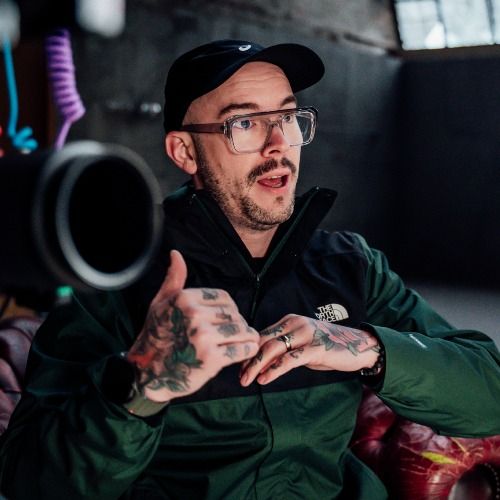
Benjamin Crossley: The LinkedIn Post That Won a Major Client (And Why Engagement Isn't Everything)
In this episode of The Build Up Podcast, we sit down with Benjamin Crossley, Creative Director at Draft and former Head of Marketing at Shawston, to explore the realities of marketing in a niche corner of the construction industry.
After almost nine years building his marketing career at Shawston, Benji has taken the leap into agency life, setting up Draft with a university friend. But before making that move, he spent years developing the marketing function at one of the UK's leading fire protection distributors, bringing work in-house, building its LinkedIn presence from 500 followers to nearly 5,000, and tripling monthly impressions in just 12 months.
Benji shares what it takes to make marketing work in an industry where everyone knows everyone, why engagement doesn't necessarily translate into sales, and how one of Shawston's worst-performing LinkedIn posts actually helped secure a client deal worth tens of thousands of pounds.
We also get into the realities of being a one-person marketing team, staying close to the sales department, building trust in the fire protection industry following Grenfell and the Building Safety Act, and getting creative with limited budgets. From daily posting experiments and turning one podcast recording into months of content to getting the sales team involved in LinkedIn, there's plenty of practical insight for marketers working in construction.
And as Benji looks ahead to this next chapter with Draft, we get a glimpse into his plans for the agency and how he's taking that experience into helping other businesses with their digital marketing, websites and social presence. Whether you're an in-house marketer, working agency-side or thinking about taking the leap yourself, this one's well worth a listen.
Follow Benjamin and Draft:
LinkedIn: https://www.linkedin.com/in/benjamincrossley5/
Website: https://www.draftstudio.co.uk/
Stay connected with dissident creative agency:
https://linktr.ee/dissidentagency
Subscribe now and don't miss future episodes of The Build Up Podcast!
Transcript
posting.
Speaker:Frequency number one, I'd say without a doubt.
Speaker:Because the engagement doesn't necessarily sell a product.
Speaker:If you just sell, it's dead.
Speaker:one post that went out secured a major client deal.
Speaker:And, you know, you've got like tens of thousands of pounds worth of business
Speaker:that's then coming through,
Speaker:Hello, and welcome to another episode of the Build up.
Speaker:I'm Dan, the creative director at this.
Speaker:And today I'm joined by Benjamin Crossley, who's the ex head of marketing at
Speaker:shorten, which is a kind of niche fire safety distributor.
Speaker:Really, really interesting episode.
Speaker:This for the guys that can relate to being like the solo marketer in
Speaker:a massive company trying to do everything.
Speaker:We talk scrappy, low budget marketing tactics, performance
Speaker:versus revenue, how it's not all about chasing engagement, and how one
Speaker:of the worst performing posts that they put out on LinkedIn actually generated tens
Speaker:of thousands of pounds of revenue.
Speaker:So really, really interesting one this week.
Speaker:Check it out
Speaker:Benji, thank you so much for being on the podcast, mate.
Speaker:Really appreciate it.
Speaker:Thanks for coming all the way from Marnie, is it?
Speaker:Yeah. Yeah.
Speaker:Manchester.
Speaker:Yeah. Yeah I'm actually down in Stockport, but it's near enough.
Speaker:Yeah, yeah.
Speaker:It's cool if I say you're from Manchester.
Speaker:Yeah, exactly.
Speaker:Yeah, yeah, yeah.
Speaker:Nothing wrong with Stockport.
Speaker:I know some people might take offense that, but it's all right.
Speaker:Give me the short version.
Speaker:Benji. Like your your background in marketing.
Speaker:Like you know what?
Speaker:What's led you up to this point, I guess.
Speaker:Yeah.
Speaker:So finished university trying to think about nine years ago.
Speaker:When I did when I went into university, I was doing website and digital
Speaker:marketing.
Speaker:So big focus in that kind of always into I remember getting Photoshop when
Speaker:I was in school, one of my teachers, I think he gave me a
Speaker:dodgy copy, not sure how legal that was, but it was.
Speaker:Yeah.
Speaker:No, no.
Speaker:Yeah.
Speaker:Cracked copies, but I loved it.
Speaker:You know, it's just grateful and just messing about, you know, just doing all
Speaker:sorts of stuff with it.
Speaker:And then.
Speaker:Yeah, just kind of got into that.
Speaker:Went to university, focused a bit more on webbing University, but sort of
Speaker:sort of like you have to get into being like a cold guy who's
Speaker:just sat coding all day long, every single day.
Speaker:And I was like, I don't think this is for me.
Speaker:Yeah.
Speaker:Yeah. So I mean, the cold guys, they love it, you know, they just live
Speaker:and breathe it.
Speaker:So it's a different language to them.
Speaker:They're just there all the time and.
Speaker:Yeah, but it wasn't for me.
Speaker:So Yeah.
Speaker:Finished, finished university.
Speaker:And then I was like, right.
Speaker:Looking for work and I, you know, a new kind of had a variety
Speaker:of skills.
Speaker:So, white folks into the marketing side of things.
Speaker:And I moved down to Manchester at that time and applied for the player
Speaker:for the job at shorten as a graduate role.
Speaker:And that's just kind of marketing assistant.
Speaker:Didn't really know what to expect.
Speaker:You know, it was my first had had a little bit of work after
Speaker:university, but that was a bit more admin with a with a touch of
Speaker:marketing to it.
Speaker:So this was my first proper role and start of my career.
Speaker:And yeah, it was it was great experience, to be honest.
Speaker:I enjoyed it.
Speaker:It was, you know, it was a really varied role.
Speaker:I got to get into a business that was growing.
Speaker:So, I was given a lot of opportunities that I probably wouldn't have been
Speaker:given kind of at that level in other companies.
Speaker:So I really got to get hands on and take ownership of stuff from
Speaker:from early.
Speaker:I got to produce the actual website at the time was like quite groundbreaking
Speaker:in the industry.
Speaker:So that was a nice experience for me, and then just kept taking on
Speaker:more responsibility from there and working through, through my career.
Speaker:And then yeah, ended up leaving shorten kind of middle of this year.
Speaker:So June time and now I'm working on setting up my own agency with
Speaker:one of my good friends from university.
Speaker:So yeah, exciting times for me, I love that.
Speaker:Can you give the audience like a brief introduction to like, short and just
Speaker:just so we can get a sense of like what kind of marketing function
Speaker:that was and the kind of bit, well, the kind of the business that
Speaker:was.
Speaker:Yeah. So we were a.
Speaker:Multi market distributor.
Speaker:We primarily operated in the fire sprinkler industry.
Speaker:So we were the market leaders in that in that industry.
Speaker:We also operated within mechanical Services, but were a much smaller player in that,
Speaker:in that in that field and much bigger industry.
Speaker:The fire protection was a bit much smaller space.
Speaker:So yeah, that was kind of primarily what we're doing.
Speaker:And yeah, we're just my, my role was kind of covering all the different
Speaker:bases of that.
Speaker:So, you know, it was depending on the business needs.
Speaker:And we did acquire sort of further businesses in the group throughout my time
Speaker:there.
Speaker:So we had a tube distribution center, we had a fabrication business and a
Speaker:competitor that that required that.
Speaker:We're also in the fire protection industry.
Speaker:So we'd also take on responsibility for sort of leading their marketing and branding.
Speaker:So super niche then basically like it's real kind of like when you when
Speaker:you think of like the hierarchy of sexy things in in construction, fire protection
Speaker:usually is seen as pretty low down on, on that kind of spectrum of
Speaker:just like, well, that's really neat because you've got a real specific customer base.
Speaker:The stuff that you talk about in general is quite technical, I imagine.
Speaker:Yeah, yeah.
Speaker:It's not like marketing for Screwfix.
Speaker:No, not at all.
Speaker:No it's not, you know, it's business to business.
Speaker:You know, you are you are working.
Speaker:You are putting out content for some customers.
Speaker:It's very much an industry where everyone knows everyone.
Speaker:Most people in the industry have been in the industry the whole career.
Speaker:You know, it's like half of the people had come from a different competitor
Speaker:or, you know, somewhere else in the industry and sort of jumped about for,
Speaker:for out their careers.
Speaker:So yeah, it was, it was, it was small, it was quite niche.
Speaker:And yeah, that sort of shaped a lot of the way that we, we
Speaker:approached the marketing.
Speaker:I mean, I think just construction in general, although some of the bigger names,
Speaker:like you said, like Screwfix, it might be a little bit different.
Speaker:I do think it's it's a different experience compared to what you see, you
Speaker:know, with like some of the big, big C type brands such as, you
Speaker:know, something like an icon or an Asos or whoever it might be.
Speaker:You know, we're very different and what we're doing and what we're working on
Speaker:and the approach that we're kind of taking, but there is still an element
Speaker:of marketing is market.
Speaker:And so, you know, you've got to factor in that as well.
Speaker:Yeah. Yeah.
Speaker:It's an interesting kind of thing isn't it.
Speaker:And it's like you said it, they're like, you know, everyone knows everyone in
Speaker:this industry.
Speaker:Construction is one of those kind of few industries that you can build a
Speaker:business technically with no marketing, you know.
Speaker:Yes.
Speaker:Yeah. I'm not sure that might start phasing out.
Speaker:I think as, as as we go further into the future.
Speaker:But, you know, there's these businesses that, you know, turning over millions and millions
Speaker:of pounds, don't even have a website.
Speaker:You know, it's just because they have all five people that buy from them
Speaker:and or whatever.
Speaker:So, so you got brought in, but you kind of like pretty much the
Speaker:only marketer at that point in there.
Speaker:So we had one other person on the team, but she was she
Speaker:was operating, she wasn't working full time.
Speaker:She was working three days a week.
Speaker:She was kind of leading but working with an agency.
Speaker:So as I came in, I was taking more and more off the agency's
Speaker:plate and bringing a lot of the stuff in-house.
Speaker:And then over time, I was kind of leading the function as well.
Speaker:And she was more of a consultant type role because she had a, you
Speaker:know, a career that she'd been in the in the industry for years and
Speaker:was an experienced marketeer.
Speaker:So it was good to kind of bounced off of her, but sort of
Speaker:that was the face of marketing in the business day to day.
Speaker:Right? Yes.
Speaker:Yeah. Yeah I know.
Speaker:Yeah. And it's like I thought it's really cool that you're doing this podcast because,
Speaker:I guess when I was watching some of the clips that I, that I'd
Speaker:seen from some other people, it's nice to have that experience shared a little
Speaker:bit, because there's a lot of challenges when you're coming into a business, as
Speaker:you mentioned before, it's not really seen as an essential function.
Speaker:You know, there was a lot of competitors that we had that didn't have
Speaker:a website.
Speaker:They didn't really have the barely had a logo.
Speaker:Some of them it was, you know, they really just down to basics.
Speaker:They just had some contacts pick up the phone.
Speaker:They've got a little warehouse and ship a few products out and you know,
Speaker:they can make a few quid off of that.
Speaker:So a lot of people in the industry don't necessarily see a need for
Speaker:marketing.
Speaker:Even though, you know, we saw a lot of tangible benefits, especially over, over
Speaker:the course of my career, it's completely different to, like I was saying before,
Speaker:you know, a big brand like let's say, for example, are exclusively online, relying
Speaker:completely on the market.
Speaker:And, you know, that's going to be an absolutely essential function for them and
Speaker:is going to be a primary driver of their sales.
Speaker:We're kind of like having to prove why we are benefiting and what we
Speaker:are doing while we're doing it as well.
Speaker:So it's quite a unique experience kind of coming from that angle.
Speaker:It's a tough one, isn't it?
Speaker:Like I say, there's quite a lot like marketing to some extent in some
Speaker:businesses.
Speaker:Initially it seems to take box exercise.
Speaker:Someone said that someone told them they probably need to get some marketing team
Speaker:in to do some marketing, and the is going cool.
Speaker:Okay.
Speaker:And kind of, you know, it's quite common that you'll get a situation.
Speaker:I suppose your situation is slightly different, but essentially you'll get a junior the
Speaker:tide in essentially to run the marketing, which should really be the job of
Speaker:like one senior person and like four or 5 or 6 other people with
Speaker:unique skill sets.
Speaker:Yeah. And you see this very, very often in, in construction, especially in distribution
Speaker:manufacturing where, you know, you've got essentially someone that's got no experience
Speaker:in the industry, very little experience in marketing going, hey, lead marketing.
Speaker:So it was a lot of pressure on you, doesn't it?
Speaker:It's great because it's like a baptism of fire.
Speaker:You learn fast.
Speaker:There's usually and obviously you've got to try and prove your worth, which is
Speaker:which is really, really tricky.
Speaker:But you end up being whether you like it or not, multi-skilled marketer.
Speaker:There's there's no option of being.
Speaker:I only do email, I only do CRM or whatever that doesn't exist, does
Speaker:it? And maybe like if you get into bigger businesses, you can have that.
Speaker:But, it's yeah, it's an interesting kind of experience to, to be a marketer
Speaker:in construction, especially in those kinds of businesses.
Speaker:Yeah.
Speaker:I actually, you know, it's funny because I see a lot of content on
Speaker:LinkedIn from people going on about how marketers are expected to do this, this,
Speaker:this, and, you know, to have so many skills.
Speaker:And it's like, a lot of kind of people complaining about that.
Speaker:But for me, I actually quite enjoyed the variety, enjoyed not being boxed into,
Speaker:you know, only doing SEO or only doing Google ads or only doing social
Speaker:media or, you know, whichever area you might be locked into.
Speaker:You know, like I say, for bigger businesses there will be a need for
Speaker:that. But for me, it was great kind of having that variety of experience.
Speaker:And I feel like now, you know, particularly in the past couple of years
Speaker:with, with this of AI, but even kind of early in my career, you've
Speaker:got so much content available online for YouTube through, over websites that have courses
Speaker:and training.
Speaker:It's like you can just spend a lot of time learning, doing.
Speaker:And that was kind of fun for me because it's like you're exploring different
Speaker:stuff, you learn new skills and no two days of a real the same.
Speaker:So you get that variety and you get that skills and you kind of
Speaker:get to learn as well what you're interested in, what you enjoy more, and
Speaker:where you strengths lie.
Speaker:So yeah, it is like, you know, it's a bit of a because I
Speaker:see this take a lot and but that, you know, to me, I actually
Speaker:think it's nice being able to have that experience.
Speaker:And I think with AI as well, for a lot of people now coming
Speaker:up, it's like I'd embrace that and just say, you know, go for it.
Speaker:Get explore, try stuff.
Speaker:And, you know, you just you never know what's going to work.
Speaker:And it's just like, have a bit of fun with it and experiment.
Speaker:I think what's really cool about being in like your situation and a lot
Speaker:of other people's situation in marketing within construction, and this will happen in
Speaker:other industries as well, where essentially you're kind of forced to take on the
Speaker:role of maybe five or 6 or 7 different specialisms and kind of have
Speaker:a go at each one of those sets
Speaker:you up really nicely to be a marketing manager later on down the line.
Speaker:Yeah. I mean, there's probably it probably ends up being like you're, you know, you
Speaker:start off almost as a marketing manager at some extent, but at least then
Speaker:when you have opportunities to have a team underneath you and stuff, you understand
Speaker:the processes of of are people who have specialisms, so you know where to
Speaker:point them and you know how to report on it.
Speaker:You know what to expect, where it's like you say, if you're a specialist
Speaker:in, let's say, Google ads, you don't really have an opinion on social media
Speaker:content.
Speaker:You don't have an opinion on email necessarily to some extent.
Speaker:So it says you're really nicely for either setting up your own agency, where
Speaker:you can take on clients and understand their needs and, and be able to,
Speaker:I guess, identify, you know, what steps need to be taken and to grow
Speaker:their marketing, to grow the business.
Speaker:This is actually quite nice in that respect.
Speaker:You get this back to five, but it's said to be a, you know,
Speaker:a highly qualified professional manager later on down the line.
Speaker:So you were, you would say in the marketing for, for the brand, started
Speaker:off with like websites and I imagine there was lots of other functions that
Speaker:you were working in once you kind of set up the agenda, like what
Speaker:did you put the most effort in?
Speaker:Do you think that made the most difference?
Speaker:Yeah.
Speaker:So, you know, it's quite interesting because it varied so much like sort of
Speaker:quartz Quarterly.
Speaker:You know, we there was our kind of planning of stuff that we wanted
Speaker:to explore further and build on.
Speaker:And, you know, we'd be looking at sort of some of the analytics and
Speaker:the results that we're getting from campaigns that we'd run, but then we're also
Speaker:having to factor in the business's needs, what's going on in the markets.
Speaker:You know, as I said before, we kind of covered two big sectors, but
Speaker:essentially we broke it down.
Speaker:It's kind of for different market sectors.
Speaker:So you know, you're having to switch sometimes depending on the focus depending on
Speaker:commercial needs.
Speaker:So there's a lot of a lot of that going on.
Speaker:And we also covered sad into the mix of the long list of market.
Speaker:And we also covered the a lot of the internal comms and internal
Speaker:messaging and brand work and people and culture side of things to we did
Speaker:sort of lay down the line how people and culture, ahead of pack.
Speaker:Sorry, but, you know, in terms of production, in terms of creating content, we
Speaker:were very much leading a lot of that too.
Speaker:So, you know, really very quiet quarter depending on what was going on.
Speaker:But some of the areas that we had the most success with, particularly later
Speaker:on, were linked in.
Speaker:That was brilliant for us.
Speaker:I mean, we consistently use LinkedIn throughout, you know.
Speaker:Remember when I joined, I think we were on about I can't remember the
Speaker:exact number, but I remember 500 followers being like a big milestone to us.
Speaker:And yeah, we were we were quite close to hitting 5000 just, just when
Speaker:I left, which, you know, in a small industry like us, some of the
Speaker:bigger industries, it's quite a small number, but in a small, just like ours,
Speaker:you know, it was a big it was a big achievement and essentially a
Speaker:fire protection distributor.
Speaker:Yeah. Pretty big.
Speaker:Yeah. Yeah.
Speaker:And it's what we found was it was very relevant as well.
Speaker:You know, the vast majority of our followers were in the industry or connected
Speaker:to the industry.
Speaker:It wasn't just people who didn't really mean much or didn't really add to
Speaker:value to the page.
Speaker:So yeah, we built that up.
Speaker:And the last 18 months, what I realized was we
Speaker:spent a lot of time because it was very different, quite, quite would spend
Speaker:a lot of time kind of switching and changing between stuff.
Speaker:And I thought, we can't always plan for what's going to happen with the
Speaker:business, but we can take some control in terms of what we're focusing on
Speaker:outside of that and what it's kind of build up our assets.
Speaker:So LinkedIn was we knew it was one of our best assets.
Speaker:So I said, right, let's focus on what we can do to try and
Speaker:build the LinkedIn page and to try and help increase engagement, help increase help
Speaker:improve the content quality and generate more conversation, more leads, and so on through
Speaker:LinkedIn.
Speaker:Because everything that we put out goes out through LinkedIn at one point or
Speaker:another.
Speaker:So it's like the more engagement they get, the more we grow the page
Speaker:and more engagement with everything in, the more people that we reach.
Speaker:So it was a win win situation.
Speaker:So yeah, what we did was created like a 12 month plan.
Speaker:And initially started actually with a bit of a test.
Speaker:And this is what I was kind of saying earlier, like, it's like just
Speaker:test stuff, experiment, have a bit fun.
Speaker:You know, we weren't social media specialists at all but learned so much kind
Speaker:of doing this process.
Speaker:So I just I said to Angela, who's the lady that worked at the
Speaker:time, said, let's just see if we post every day because we've seen you
Speaker:see so many people talking about posting frequency and open it.
Speaker:And, and I'm like, I don't know if it'll be worthwhile.
Speaker:I don't know if we've got enough good contents go out, but let's just
Speaker:try it.
Speaker:Let's, let's just do it for a month as a just a bit of
Speaker:a challenge and let's just see what the stats say.
Speaker:And, you know, we didn't know if it would be sustainable, but we can
Speaker:manage a month, right.
Speaker:You can do that.
Speaker:So and I'm not talking weekends, you know, it's working days.
Speaker:So five days of the week kind of dead of the week.
Speaker:Yeah.
Speaker:Yeah yeah.
Speaker:You can take a break.
Speaker:Yeah yeah yeah.
Speaker:You've got to be really bored haven't you.
Speaker:On the weekend to be getting it to you.
Speaker:I'm just like anybody here.
Speaker:Yeah I'm still, I'm still here creating content.
Speaker:Anybody actually like wanting like no no no just.
Speaker:Yeah. Falls flat.
Speaker:Yeah. So we did that.
Speaker:We did that first month and yeah it was absolutely fantastic.
Speaker:Like I think we saw about 50% increase in pressure and engagement rate went
Speaker:up. And you know we've kind of scraping around for some of the posts and
Speaker:we're thinking like maybe not even putting out the quality of content, just increasing
Speaker:that volume.
Speaker:Everything just improved.
Speaker:You know, when you go on the analytics page on LinkedIn, you're just seeing
Speaker:green everywhere with the arrows.
Speaker:It was quite it was quite satisfying to see that.
Speaker:So we then said, right, so we're going to put this over a 12
Speaker:month period, and trial it properly and try and build the page up.
Speaker:So we kind of did a two fold plan where we created a quality
Speaker:strategy to say, right, we know that we don't want to let our content
Speaker:quality slip.
Speaker:So yeah, let's make sure that we're putting out good quality content.
Speaker:But we're also getting five posts a week every week.
Speaker:So it took a bit of work, but we kind of created this strategy
Speaker:to say, what are the main messages that we need to push?
Speaker:And also what do we know gets the most engagement because certain messages, it's
Speaker:really important for people to see them, but they don't get the level of
Speaker:engagement that you want.
Speaker:Yeah, it doesn't matter though, because if people see it, they might not like
Speaker:it, they might not comment on it.
Speaker:But as long as they see it and we'd always hear back that people
Speaker:are seeing it.
Speaker:So we might put out a post about, I don't know, something we were
Speaker:doing, you know, for our quality process.
Speaker:And it's an important update.
Speaker:Might only get ten likes, most of them internal, but people are seeing it.
Speaker:Some of the customers are seeing it.
Speaker:Sales guys are on the phone to them or in meetings with them, and
Speaker:it's getting commented on this conversation around it.
Speaker:Fantastic.
Speaker:It doesn't matter that the analytics are great.
Speaker:Yeah, that's dwell on that for a second.
Speaker:Because this this is something that we that we talk about a lot.
Speaker:And I feel like there's a lot of junior marketers that are even senior
Speaker:marketers.
Speaker:They focus on these metrics because they, you know, we don't have a lot
Speaker:in terms of social media when it comes to what's working apart from these
Speaker:metrics.
Speaker:And the metrics are typically likes, comments, general engagement stuff.
Speaker:And obviously reach is important, but there'll be a lot of marketers
Speaker:out there that are chasing engagement just for engagement, saying there's no reason for
Speaker:it because they feel like it's not.
Speaker:We need to get more engagement.
Speaker:You need to get more engagement.
Speaker:And I always ask the question, why?
Speaker:Like what?
Speaker:What do you need engagement for?
Speaker:Because the engagement doesn't necessarily sell a product.
Speaker:And, you know, you think about some of the best ads in the world,
Speaker:some of the best, most, prolific converting ads that you've ever
Speaker:come across on social media, these amazing campaigns that I'm like, oh, that's amazing.
Speaker:I can comment on it.
Speaker:Yeah, yeah, yeah, just saw it.
Speaker:That's amazing.
Speaker:Last time, like last time I saw a an advert for a New Balance
Speaker:trainer, I didn't comment on it going.
Speaker:These are amazing.
Speaker:I just went, cool.
Speaker:I'll buy them.
Speaker:Yeah, yeah.
Speaker:Which is what you want, which is where you want marketing to do.
Speaker:Right. Yeah.
Speaker:So that's it's such a huge point there.
Speaker:And I feel like I know people really grasp that kind of idea of
Speaker:yes, engagements good is great that you can you can build some sort of
Speaker:community around a brand.
Speaker:You can have some thought leadership or adventure that you need to sell the
Speaker:thing that you sell.
Speaker:Yeah. And those posts need to perform in, in terms of selling, not not in
Speaker:terms of engagement, 20%.
Speaker:Yeah. So that was kind of what we tried to do was get a bit
Speaker:of a split approach.
Speaker:So, so focus on some of the content that we know will get engagement
Speaker:to keep kind of engagement levels up, to keep the page getting pushed out
Speaker:into people's feeds and so on, and then also share those messages in between
Speaker:those.
Speaker:So one of the things that we featured in the plan was we just
Speaker:found by looking through the analytics and kind of tracking, people love people, people,
Speaker:people just love to see a face.
Speaker:And, you know, if it's something like a long service award, someone's birthday, there's
Speaker:an event in the office, there's a celebration, whatever it is, sharing all of
Speaker:that, just people's faces on there.
Speaker:And people love it and they just engage with it.
Speaker:And you know, you're showing you're showing your people.
Speaker:Because also what you forget is a lot of customers don't really know your
Speaker:business.
Speaker:They know 1 or 2 people, just a sales guy or, you know, a
Speaker:contact on the phone.
Speaker:They might not have even seen the person in the office who are speaking
Speaker:to every single day.
Speaker:So the more you can get people's faces out and it gives conversation, it
Speaker:helps the sales guys talk.
Speaker:It helps the customer service teams talk, it builds relationships, you know, and and
Speaker:it's great for great for engagement.
Speaker:So it's kind of like getting that balance of pushing a bit of that
Speaker:out, getting some of the some of the faces out, getting a bit of
Speaker:the higher, high performing content.
Speaker:But then also like saying getting the messages out the, the cell and the
Speaker:stuff that people need to see.
Speaker:If you just sell, it's dead.
Speaker:Dead. Yes.
Speaker:Yeah. And we learned that the hard way as well.
Speaker:You know, we spent some time where it was like very much a reactive,
Speaker:like the sales guy was like, oh, we need to put this out.
Speaker:We need to get this out and get a message out.
Speaker:And we spend a lot of work like, you know, putting together brochures, fliers,
Speaker:content, push it out, and no one's really receiving it or interested in, like.
Speaker:Right, okay.
Speaker:This isn't working.
Speaker:I think one of the things that we found interesting on, on that side
Speaker:of things was having a creative angle.
Speaker:Yes.
Speaker:So it's so easy to I think especially, you know, for me, as, as
Speaker:a young marketeer, it's like you're a bit nervous about doing anything that isn't
Speaker:like, professional, super professional, you know, you want it to all look really good
Speaker:and and polished, but you lose the character, you lose the things that are
Speaker:interesting.
Speaker:You lose the things that kind of grab attention.
Speaker:So, you know, part of that has to come from learning the business, having
Speaker:some industry knowledge, knowing what's appropriate, what's not appropriate.
Speaker:You know, the construction industry is probably a bit more leeway than some other
Speaker:industries because, you know, people people are it's not like law or something like
Speaker:that. People are more relaxed.
Speaker:It's a bit more casual.
Speaker:So you can have a bit more fun, I think, in my eyes.
Speaker:if we could, if we could boil this down to the levers, the grew
Speaker:the LinkedIn platform for you guys as a really, really credible, tool for marketing
Speaker:and sales, what would they be?
Speaker:Frequency posting.
Speaker:Frequency number one, I'd say without a doubt.
Speaker:If you're not posting regularly that that is going to cost your engagement essentially,
Speaker:and you're not going to get impressions, you're not going to reach as many
Speaker:people in network, you're not going to gain as many followers.
Speaker:So yeah, increase that, increase that frequency.
Speaker:And something that I would say around the frequency as well is don't be
Speaker:afraid. And I think I've seen other people mention this on the podcast when I
Speaker:was looking through.
Speaker:Don't be afraid to post the same things more than once.
Speaker:Yeah, evergreen content is fine.
Speaker:It's like, yeah, maybe, you know, you want to leave a few months or
Speaker:something or a few weeks between it, like, depending on what it is.
Speaker:But essentially the thing that you always forget is as marketers, we're here trying
Speaker:to create all this content.
Speaker:And we spent ages on these posts and we've pushed it out and we've
Speaker:seen it a million times.
Speaker:Most of your audience don't even see the posts that you put out.
Speaker:So even if you put out one post, if you look at the engagement,
Speaker:you might have 5000 followers.
Speaker:It might only reach 1000 people.
Speaker:So for a thousand of your followers haven't seen it.
Speaker:And it's like, just keep keep changing out content.
Speaker:You know, we were so like when we first started doing it would be
Speaker:like, like, don't know about this.
Speaker:That's just try it and see.
Speaker:And then we just started doing it more and more and it was just
Speaker:like, yeah, this is great because it makes life easier for us.
Speaker:A lot of people, sometimes they get the same people comment and reacting like
Speaker:they've never seen it before.
Speaker:So, you know, it's great and we'd get new people engaging with every time.
Speaker:So it's like, you know, just reaching more people.
Speaker:It's perfect.
Speaker:So yeah, absolutely.
Speaker:Do not be afraid to to reuse content.
Speaker:And the other thing as well is sometimes upcycling content, you know, taking something
Speaker:that's possible before just adding a fresh spin on it, whatever the latest stuff
Speaker:that's going on is sort of tweak the message in a little bit, or
Speaker:just that can be another nice way to to make use of it.
Speaker:So yeah, increasing the frequency then quality.
Speaker:So having a strategy for your messaging.
Speaker:So don't just kind of go out just throwing out posts randomly.
Speaker:Have a think about what is it you wanting to put out.
Speaker:How are you wanting to be perceived by customers?
Speaker:You know, you've got to think about your brand positioning, positioning, your brand messaging,
Speaker:your key selling points and yeah, how you want people to perceive your brand,
Speaker:you know, what do you want your customer to see your brand as you
Speaker:know, do you want to be a premium supplier or are you trying to
Speaker:be like a marks and Spencer of your industry, or are you trying to
Speaker:be like an
Speaker:Aldi? You know, there's different approaches, different ways.
Speaker:Nothing wrong with with whatever it is your business does.
Speaker:It's just making sure it aligns.
Speaker:If you're cheap and cheerful, but you're trying to take them out expensive, it
Speaker:might cause a bit of an issue for you.
Speaker:So align your brand position in your messaging with your selling positioning.
Speaker:And then also thinking about what works, you know, look, look at the posts
Speaker:that you're doing, what gets the high, high engagement because you want to keep
Speaker:some of that in there.
Speaker:But like I said before, don't get too fixated on engagement.
Speaker:Only it's having a balance of putting the messages out there.
Speaker:Important they might not perform as well, but then also putting out the engaging
Speaker:content to help increase your reach, increasing network.
Speaker:I think what's really important about that as well as, you know, unfortunately we're
Speaker:in a in industry where a post that focuses more on conversion is
Speaker:very hard to track as a distributor.
Speaker:Right, because not a lot of people are buying your stuff online.
Speaker:Right? So yeah, that's going to be really, really difficult to to find.
Speaker:The the breadcrumb trail to that sale was, was due to me doing this
Speaker:marketing activity.
Speaker:So you've got to use a little bit of instinct and obviously take data
Speaker:from, you know, let's say it's always like the last 12 months.
Speaker:You can't you can't take data from the last month.
Speaker:It just doesn't work out like that.
Speaker:So you look at the last 12 months, you go, we implemented this strategy.
Speaker:We got loads of engagement.
Speaker:We've built the followers.
Speaker:That's great.
Speaker:And the rest of the stuff really is focused on conversion.
Speaker:It's focused on, you know, just getting people to understand what we do, what
Speaker:we sell and how we sell it.
Speaker:And if the sales are going up, keep do that again.
Speaker:The other thing I'd mention on that as well is, keep close to the
Speaker:sales team, keep just having conversations, talking to them because they will let you
Speaker:know some of what he's working.
Speaker:And it might not be.
Speaker:They're not going to necessarily pick up the phone and call you just to
Speaker:tell you they had one conversation with someone mentioned it.
Speaker:But if you're chatting to them, don't have to be daily, but, you know,
Speaker:weekly or every couple of weeks kind of catching up with the guys, they'll
Speaker:let you know that, oh, spoke to so-and-so live a week and they saw
Speaker:this post and they actually picked up the phone to me and spoke to
Speaker:me about this.
Speaker:And and that was one of the ways that we really tracked and measure
Speaker:our performance.
Speaker:You know, it was a big it was a big part of kind of
Speaker:what we did because, yeah, we don't you know, we didn't have an e-commerce
Speaker:store, so there was no direct way to just track like a breadcrumb trail
Speaker:that it wasn't possible.
Speaker:So we had to go off kind of.
Speaker:Yeah. What conversations have been had?
Speaker:Who's speaking to who?
Speaker:And just get a bit of that live feedback from from the sales teams
Speaker:or the customer service teams to find out what's going on and what's being
Speaker:So you were putting out content on LinkedIn.
Speaker:You would, you know, you were trying things like daily posting.
Speaker:Everything was going well, where the hell are you getting this content from as
Speaker:a one man to kind of like one and, and another person kind of
Speaker:team like for, you know, a large distribute.
Speaker:And there was, there was multiple sites, right.
Speaker:You had loads of stuff going on.
Speaker:It wasn't just like Chausson was, you know, one thing and that was, you
Speaker:know, there was multiple stuff going on.
Speaker:Yeah, yeah.
Speaker:How how are you doing it?
Speaker:Yeah.
Speaker:So that was the thing that we were most worried about.
Speaker:You know, it for a while.
Speaker:It took quite a lot of energy for us just to get two pulse
Speaker:a week on the shorten page.
Speaker:And it's like, how are we going to get five?
Speaker:I think it's there's a mindset shift and I think there's a, there's a
Speaker:learning curve.
Speaker:You know, it's getting used to that.
Speaker:I also think one of the things we learned quite quickly is don't over
Speaker:plan.
Speaker:So I know some people, you know, it might work for some businesses might
Speaker:have like a 30 day calendar and map it.
Speaker:We we just did not work like that.
Speaker:It just it wasn't happening.
Speaker:What we found was working week to week.
Speaker:We could be a lot more reactive.
Speaker:We could find out what's going on in the business.
Speaker:You want to try and get some people involved in the business.
Speaker:You can't get as many people as you'd like to be involved in the
Speaker:business.
Speaker:I don't know if it's the same for all industries, but I think in
Speaker:construction particular, it's quite old school and not everyone's like on the phones
Speaker:all the time.
Speaker:Not everyone's comfortable getting in front of a camera or having the picture taken.
Speaker:Some people really don't like it.
Speaker:You know, you've got some of these challenges to deal with.
Speaker:But encouraging people when you can sort of leading by example, trying to get
Speaker:as much out there as you can.
Speaker:If you're in a branch and there's something happening, it's like, oh, let's go
Speaker:have a quick picture of that.
Speaker:Or if someone's mentioning someone's birthday or there's a celebration going on, send
Speaker:us a picture of them.
Speaker:It would stick it on LinkedIn.
Speaker:So we kept kind of drilling that into all the general managers in the
Speaker:business to, to be aware of that.
Speaker:And, you know, some of them, you didn't get so much, but there were
Speaker:some of them who would be really good at sending content through.
Speaker:And that was really helpful for us.
Speaker:And then also, we'd be whatever projects were working on, it's like, how can
Speaker:we get good content from this?
Speaker:So for example, if we're doing a podcast recording rather than just doing the
Speaker:podcast, it's like, let's get a couple of pictures of us recording the podcast
Speaker:and put that out as a post.
Speaker:And, you know, you start thinking and finding ways to to kind of get
Speaker:more content out there and to do a bit more, with the content that
Speaker:you're doing. And then also, again, like I'm saying that the sort of reposting content is
Speaker:put out before sometimes upcycling stuff like, you know, we just go through our
Speaker:website and just say, we shared this before, but it's not.
Speaker:It's been years or, you know, how could we turn this into a little
Speaker:graphic?
Speaker:You know, there's some content that we produced, we had loads of content that
Speaker:we produced, and a lot of the time it was just going through some
Speaker:of that content and finding ways to to reshare it or to recycle it.
Speaker:Because even pictures, you know, we were limited on good pictures.
Speaker:But you go through and you kind of find stuff from a couple of
Speaker:years back and yeah, it's like some great pictures there that you've just kind
Speaker:of forgotten about.
Speaker:So it's just digging through, having to look through the archives, finding what you've
Speaker:got there and reshare and stuff, putting out some different messages, maybe, you know,
Speaker:just upcycling it a little bit.
Speaker:And then, yeah, like I said, just going week to week, you know, so
Speaker:we'd start, start the week Monday morning, we'd have a meeting, catch up, plan
Speaker:out the week's work, and then we'd also just say, what have we got
Speaker:linked in this week?
Speaker:Might on how three posts agreed in that meeting, but we know that something
Speaker:is going to come up in the meantime so we can we can get
Speaker:the five by the end of the week.
Speaker:Just the three is massive, right?
Speaker:Yeah. I mean, even even as a, as a marketer and as a creative, the
Speaker:the thought of me putting out three posts on LinkedIn, which I know is
Speaker:my most my best performing channel as a personal brand, is daunting because
Speaker:it's me that's got to do it, you know?
Speaker:Whereas if you're a marketer that's also doing other stuff, not just social media.
Speaker:Social media really should be a full, full time business.
Speaker:Yeah. You know, they should they should be your soul thing, especially if it's a
Speaker:kind of if it's kind of business that thrives on it.
Speaker:You know.
Speaker:If not, you know, you are part of a, a small team of social
Speaker:media marketers, especially if it's e-com or something like you need crazy people on
Speaker:that.
Speaker:But yeah, it's like, you know, just getting those three posts on LinkedIn is
Speaker:absolutely massive.
Speaker:What were the things that you were noticing, you know, from posting regularly?
Speaker:You know, using these different pieces of content?
Speaker:You've got your you know, you're playing around with podcasts.
Speaker:I'm actually doing some some forms of video stills, archival stuff.
Speaker:Talk to me about like that kind of format split.
Speaker:And what were you finding was working really well?
Speaker:What kind of stuff absolutely bombed, you know, things like that.
Speaker:Did you come across any kind of nuggets of information there?
Speaker:Yeah.
Speaker:So,
Speaker:You know, it was it was interesting because we tried certain stuff over and
Speaker:over, and sometimes you could do the same thing twice and get a different
Speaker:result.
Speaker:So, so it's there is a thought there of like, it's so easy, especially
Speaker:as marketeers, like just thinking like, oh, this, this post perform really poorly.
Speaker:Let's not do a post like that again.
Speaker:And it's like, well, the algorithm might just not have picked it up very
Speaker:well that day for whatever reason.
Speaker:Just look is not on your side.
Speaker:You know, there's a few other factors that can be in it.
Speaker:So I'd say always try a few times with different types of content.
Speaker:Don't be just sort of disheartened if it's you've tried it once and it's
Speaker:flopped because that could just happen with anything.
Speaker:We always found video worked well.
Speaker:People worked well.
Speaker:Like I said before, anything with people's faces on that always got higher levels.
Speaker:Engagement, which is very.
Speaker:Yeah, yeah.
Speaker:It's one of the more social social media platforms.
Speaker:Yeah, absolutely.
Speaker:And that would always get more comments as well.
Speaker:You know, people talking and yeah, it was really good for, for engagement in
Speaker:general.
Speaker:We found with video.
Speaker:So one of the things like I said before, is it's easy to be
Speaker:trying to be sort of too polished with stuff and with video.
Speaker:It's kind of similar.
Speaker:It's like, you know, we create some videos that we felt looked fantastic, but
Speaker:they might not necessarily get that much engagement.
Speaker:And if we're actually embraced a bit of the kind of more casual day
Speaker:to day could be a little bit more rough and ready, you know, just
Speaker:shot on shot on your phone and content like that.
Speaker:That actually got a lot more engagement, felt a lot more natural, you know,
Speaker:and it was more relaxed.
Speaker:Sometimes it would be a little bit stiff.
Speaker:You know, some of the managers, some of the guys on the team, even
Speaker:myself, like you're not always comfortable being on camera.
Speaker:Some people just love it and come to life.
Speaker:Some people it's like you're a bit shy, you're a bit awkward, you're in
Speaker:and are in.
Speaker:You're stuck in a little bit symbol in over your words.
Speaker:It just doesn't matter.
Speaker:You know? You don't.
Speaker:People, people like to see real people in real conversations and real content and
Speaker:they don't care.
Speaker:And it's like in your mind, you kind of might be a bit worried,
Speaker:like, oh, is this going to represent the band brand badly?
Speaker:You know, is it a poor image for the business?
Speaker:No. Absolutely not.
Speaker:Like you're showing you're showing the people, you're making it human and people connect
Speaker:with that with that.
Speaker:So yeah, don't be afraid and don't overthink those types of content.
Speaker:But definitely something that we saw God's good returns from was having that sort
Speaker:of more natural content.
Speaker:The things that we always found struggled were anything that was like very commercial
Speaker:focused.
Speaker:So it's like, here's a product brochure.
Speaker:These are the three things that, you know, there was a purpose to some
Speaker:of those posts sometimes, but they would never perform well.
Speaker:You know, you had to expect ten likes maximum.
Speaker:You might be getting 50 to 100 likes and a really good people post,
Speaker:but those tools really commercial.
Speaker:We did them over and over again, similar things, but at the same time,
Speaker:you know, one post that went out secured a major client deal.
Speaker:And, you know, you've got like tens of thousands of pounds worth of business
Speaker:that's then coming through, potentially ongoing.
Speaker:And it's like, that's all you need and it's so worth it.
Speaker:So just because they're not performing well doesn't mean that they should be out
Speaker:of the out of the game altogether, like keep keep some of that content
Speaker:in there.
Speaker:And the problem is like, you know, like this is the thing that we
Speaker:base social media performance on those stats that we talked about earlier, engagement,
Speaker:reach and things like that.
Speaker:So they're the things that we can report on as marketers is very difficult
Speaker:for us to report on.
Speaker:Actually.
Speaker:Did it convert into a sale?
Speaker:So when you get those kind of like, you know, sort of oh my,
Speaker:like they physically told us they saw this post and then they made a
Speaker:massive order.
Speaker:Like when you get those you go, okay.
Speaker:Actually, this is worked incredibly well.
Speaker:Not for the metrics of building our follower base, but actually for generating business.
Speaker:Yeah, you can you can be disheartened in a, in this kind of industry
Speaker:where you get a post that's just it's natural as a marketer, you want
Speaker:all of the numbers to be in the group.
Speaker:Yeah, everything's gone up and all amazing.
Speaker:But eventually you just have to sell the product.
Speaker:You have to tell people where you can buy it from and and do
Speaker:all that kind of thing.
Speaker:And, that's.
Speaker:Yeah, it should never be.
Speaker:It should never be discredited.
Speaker:I think if you if you put all of your social media strategy into
Speaker:engagement, you inevitably do.
Speaker:Only people posts you you only put out the stuff that you know is
Speaker:going to perform really well in terms of engagement, but then kind of people
Speaker:just go, let's just let it people messing around on LinkedIn.
Speaker:You know, where's the business and you can lose your positioning then?
Speaker:I think.
Speaker:So, yeah.
Speaker:I feel like there's a real balance between the two.
Speaker:But also it's like, I feel like people can really go one way or
Speaker:the other too much quite easily.
Speaker:And it's I think it's just so important to keep that balance because, you
Speaker:know, we saw just through the, the, increased frequency and the quality strategy
Speaker:that we put into place across the 12 month period are impressions.
Speaker:We were averaging around 9000 impressions a month across our posts.
Speaker:That went up to 27,000 by the end of the 12 months, which was,
Speaker:you know, three, three times increase, which was absolutely fantastic.
Speaker:And average engagement was just under doubled as well.
Speaker:It was about 1.8 times increase in engagement.
Speaker:And what we heard on the back of that just in general was like
Speaker:so much feedback from customers, sales guys.
Speaker:Like it's just creating conversations.
Speaker:It's creating opportunities.
Speaker:When we do put out content that sell in or that's got commercial angle,
Speaker:it's been received by more customers and by more people.
Speaker:So, you know, you do want to build a platform up, but you don't
Speaker:want to get lost too far one way and you don't want to get
Speaker:stuck too far the other.
Speaker:You know, it's keeping that balance, switching between the two, because both laws messages
Speaker:are the business and it's important to keep that balance.
Speaker:I think one thing that's probably worth mentioning as well, which is pretty crucial
Speaker:when it comes to positioning and also just understanding what your business is and
Speaker:who is talking to is distribution and retail.
Speaker:I was kind of put them in the same bracket.
Speaker:It's a very person to person experience as it like when I think about
Speaker:retail or I think about distribution, I think about a service.
Speaker:For the most part, they think about somebody delivering a service to me, going
Speaker:to a specialist, going to somebody and asking for something, going to a counter,
Speaker:speaking to somebody.
Speaker:So, so that that kind of business in my head is a people business
Speaker:to some extent.
Speaker:Obviously they're selling a product, but it really is a service.
Speaker:So in that situation, I think it's absolutely feasible
Speaker:for you to be posting a lot more stuff around the people in the
Speaker:business, personalities, what's going on and stuff, because it is such a kind of
Speaker:relationship based type business.
Speaker:Manufacturing for me is a completely is almost completely opposite, right?
Speaker:So if you're a brand, if you are known for your high performing pliers
Speaker:and very specialist tools and stuff like that, getting Sharon from accounts on the
Speaker:social media platform a lot of the time, maybe LinkedIn, but is not relevant
Speaker:to the to the end user because it really depends on who you're marketing
Speaker:to. But, yeah, if you if you're like a, I don't know, a or a
Speaker:Milwaukee or something and it's Sharon from accounts birthday and you put that on
Speaker:your TikTok and so no one gives a
Speaker:positioning is one of my favorite things to talk about.
Speaker:So I'll had a look at the, you know, the stuff that you were
Speaker:doing at.
Speaker:And and it was slick by the website slick ads like so and
Speaker:and you know, in the preacher we were talking about, you know, what kind
Speaker:of what you want wanted shortened to be kind of known for and how
Speaker:you want it to differentiate and stuff.
Speaker:And I think you were doing a lot of stuff that you competitors weren't
Speaker:doing.
Speaker:What was your approach to that?
Speaker:Did you go in and kind of going, right, differentiation.
Speaker:I just want to do all of this stuff and, and look this way.
Speaker:What was your kind of thought process going through that.
Speaker:Yeah. So I think, we we knew our market positioning as a company and it
Speaker:was like we wanted to make the marketing reflects that, make the brand reflect
Speaker:on that and put that out there.
Speaker:You know, we're very much leaders in the industry at that time, but we
Speaker:wanted to our brand to match that essentially.
Speaker:So so it was kind of, you know, elevating the brand, elevating our presence
Speaker:online and thinking about the messaging of why are people using us, why are
Speaker:we the the main choice?
Speaker:And you know, what's sort of brought us to this position.
Speaker:So big focus around customer service.
Speaker:That was very much kind of what sells apart from some of our competitors.
Speaker:And it's a very like it's a very quick moving industry.
Speaker:Sort of fire protection is much lower down on the list of contractors.
Speaker:So they've got a last minute time slot that need to be in.
Speaker:They need to be out quickly.
Speaker:Mistakes can be very costly because it's like the projects trying to get wrapped
Speaker:up at this point.
Speaker:So customer service is essential.
Speaker:You know the deliverers need to be there.
Speaker:They need to be on time.
Speaker:They need to be a lot of time next day.
Speaker:So it was understanding that and thinking about how do we then promote ourselves
Speaker:within that essentially, and because everything the business was doing was aligning with
Speaker:that. So it wasn't really a case of like trying to create an image.
Speaker:It was just showing what makes this business what it is.
Speaker:And yeah, you know, it took a bit of time to really find out
Speaker:a bit about think over Time.
Speaker:We did a really good job of that.
Speaker:And the feedback match, you know, we heard many different customers, suppliers you know,
Speaker:to be worked with some international suppliers.
Speaker:All of them were really impressed with kind of the branding and the image
Speaker:that we had and the presence through our website and social media.
Speaker:I think your industry especially, especially with all the stuff that went down on
Speaker:Grenfell, you got the Building Safety Act, you got all of this pressure from
Speaker:an architect and four architects and the golden thread and all that kind of
Speaker:shit that you, you got to do when you're building stuff these days.
Speaker:Trust is a huge element of that.
Speaker:Right. And so, you know, having a having a brand and anything
Speaker:that reflects that kind of you can trust us, you know, we're a safe
Speaker:bet, that kind of thing.
Speaker:I imagine it's pretty big in your kind of industry.
Speaker:Absolutely.
Speaker:And one of the the key things for us was being honest as well.
Speaker:You know, we very much focused around honesty in our messaging.
Speaker:So when ESG became like really important in the industry, we weren't
Speaker:experts in ESG.
Speaker:And, you know, we don't want to try and position ourselves as something we're
Speaker:not.
Speaker:But what we were doing was having a lot of conversations, talking to suppliers,
Speaker:talking to manufacturers, talking to a credit about finding out what's going on and
Speaker:what's happening.
Speaker:And what we wanted to do was just share some of our learning.
Speaker:And, you know, so we did some podcasts.
Speaker:We did we did some material and part of some content sharing our learning.
Speaker:And, you know, we learned more and more and had more and more conversations.
Speaker:And it was a great way to go about it, because I think people
Speaker:respected that honesty and transparency.
Speaker:And then people were picking up the phone and wanting to have conversations with
Speaker:us. And, you know, it benefited us commercially and also helped build that trust with
Speaker:people because we took that honest approach.
Speaker:And yeah, that's, that's like so important because I think, you know, if you're
Speaker:trying to present something that you're not, I think that can really fall through
Speaker:at some point.
Speaker:Whereas if you just bring through, you know, to talk about what you're doing
Speaker:and be open and transparent with things, people respect that and like that.
Speaker:And that itself gets a lot more engagement and conversations going on.
Speaker:Podcasting is a formats massive for that as well.
Speaker:I love podcast, I mean, I could talk about podcast production for brands for
Speaker:ages because, you know, especially in, in the the niches that we're in, you
Speaker:know, construction, hyper niche specialisms in construction and things like that.
Speaker:You know, you ain't getting big numbers, you ain't get big.
Speaker:You this isn't being distributed out to thousands and thousands and thousands of people.
Speaker:The topics are going to be pretty dry.
Speaker:You know, it's not going to go viral a lot of time and stuff,
Speaker:but there's so many benefits to getting in a room with someone who knows
Speaker:more than you about a particular subject.
Speaker:And and you know that, like, shifts massively onto
Speaker:that kind of trust.
Speaker:You know? You know, I love personal brand as a whole.
Speaker:Even though I'm rubbish at it for myself, I was right for the clients.
Speaker:But I'm just a nightmare for just not doing anything but that kind of
Speaker:thing of if you've got somebody who's well known in your, in your business,
Speaker:in your brand or whatever, let's say it's one of the technical guys or
Speaker:something. It's got a great relationship or she's got a great relationship with quite a
Speaker:lot of different, interesting people.
Speaker:And then you get a specialist on talking about a very specific topic that's
Speaker:related to your industry.
Speaker:And they have they they have a good conversation.
Speaker:You clip that out, you obviously you put out put out the long form,
Speaker:you clip that out and then the the specialist, you go and starts talking
Speaker:about something that's actually really relevant and really valuable to your target market.
Speaker:You get associated with that, even if it wasn't your you're no idea about
Speaker:that. Like, yeah, you know what?
Speaker:You're not a you're not a specialist in that specific area, but you are
Speaker:the the vehicle that delivered that value is huge.
Speaker:Yeah.
Speaker:Just having the conversations.
Speaker:That's that's what's important.
Speaker:And other people are, you know, if they're interested, if they're in that same
Speaker:industry, they want to have those conversations with you.
Speaker:And it just it just perpetually, you know, it just helps grow learning.
Speaker:It helps it helps build sort of networks and get more and more people
Speaker:interested in your business and what you guys are doing.
Speaker:And one of the things that was interesting as well was like, like saying
Speaker:it's not all that interesting, a lot of it.
Speaker:So you have to kind of think about the audience and think about what
Speaker:you're doing. So we learned quite quickly that long form podcast, very
Speaker:little engagement.
Speaker:You know, people just aren't going to sit there.
Speaker:And yeah, it's diary of CEO.
Speaker:They might have an hour or two to listen to someone to tell you
Speaker:how you could become a millionaire or building next business, or you know, what's
Speaker:what's the latest health trend, etc.
Speaker:they don't necessarily want to listen to an hour and a half about the
Speaker:fire sprinkler industry and the latest developments in, in, in the Building Safety Act
Speaker:and so on.
Speaker:But short clips on LinkedIn.
Speaker:Fantastic.
Speaker:You know, it's it's easy to like it.
Speaker:It's a quick.
Speaker:And if you get a good a good headline, a good title that people
Speaker:are interested in or relating to, you can get a great, great content, great
Speaker:engagement.
Speaker:And that gives you tons of content because it's like what's originally like an
Speaker:hour, an hour and a half, one clip essentially is now like 30 clips
Speaker:or 20 clips of like 90s 100 and 20s.
Speaker:And yeah, we really tried to keep it around like a minute to three
Speaker:minutes for pretty much all of them, unless it was like something that was
Speaker:really relevant.
Speaker:And once we started doing that, engagement just went on massively.
Speaker:We got so much content out.
Speaker:And, you know, we're talking about LinkedIn.
Speaker:That was one of our big because we would have a post every week
Speaker:for months from one podcast recording, and it just last for such a long
Speaker:time.
Speaker:And the feedback was just fantastic.
Speaker:Like, you know, people just loved their people, loved hearing about it, love seeing
Speaker:that you're doing it.
Speaker:You know, we got so many supplier conversations, so many customer conversations, just
Speaker:people reaching out to our teams, like saying, oh, we want to get involved
Speaker:or we want to want to speak to you about this.
Speaker:I have seen that you put that out.
Speaker:And yeah, the results spoke for themselves there.
Speaker:So it's just a great ingredient for the rest of the marketing strategy.
Speaker:Yeah, I think I think every business really I'd say every business.
Speaker:And being very general, is there a lot of businesses should have a podcast,
Speaker:just to help the marketers out with some.
Speaker:Yeah.
Speaker:Just give those poor people an opportunity to clip up some videos and get,
Speaker:you know, get some value out.
Speaker:And, you know, also from, from a LinkedIn perspective, and we've very much been
Speaker:talking really about kind of like corporate marketing in terms of we're marketing
Speaker:on LinkedIn as the brand, but personal brand on LinkedIn is obviously massive as
Speaker:well. And if you've got specific people in your business that got great networks
Speaker:and things like that, get them on their put that on their platforms, on
Speaker:their own personal pages, because we find a lot of the time, and this
Speaker:is something we're incorporating a lot into our marketing strategies, is the personal
Speaker:brand of the sales team, of the technical team or whoever in these
Speaker:in these businesses will actually generate more business than if it was just put
Speaker:on the person on the, on the, the brand, and having a sort of
Speaker:combo of the two is perfect.
Speaker:Yeah, that's another big point actually through.
Speaker:And it can be a challenge because not everyone is super engaged with LinkedIn.
Speaker:But the more you can get people who are active on LinkedIn, who have
Speaker:a big following or big connections within your business to share your content or
Speaker:to outpost for you.
Speaker:Like a lot of the time, that can be more effective than putting stuff
Speaker:on the business page.
Speaker:I think it's good to get a balance above.
Speaker:It can be a struggle depending on kind of what he seems like and
Speaker:how invested they are in LinkedIn.
Speaker:But I think, you know, encouraging that even if it's just sharing, sharing with
Speaker:comments or is better than just sharing.
Speaker:But again, another thing that some people are thinking that can be a challenge,
Speaker:but the more you just get people engaged, the more you just encourage it.
Speaker:Keep the conversations going.
Speaker:Give people a bit of a prod.
Speaker:If they're in the office and you're like, oh, mate, can you just stick
Speaker:that on for us and put a little comment on, just encourage it.
Speaker:And it's well worth it because that reach just expands massively as soon as
Speaker:you put it into people's networks.
Speaker:You know, a lot of like sales guys, for example, they'll have thousands of
Speaker:connections all across the industry, really relevant.
Speaker:It's like that goes out on there.
Speaker:It's a big reach for you.
Speaker:And they're they're exactly the right connections as well.
Speaker:They're not messing about connecting with people who aren't going to benefit the business.
Speaker:Absolutely.
Speaker:Yeah.
Speaker:The massive and a lot of times these guys aren't utilizing their network.
Speaker:Well, you know, they've got their core customers.
Speaker:But actually, you know, if you've got if you've got a fairly active, like
Speaker:a sales person that's on LinkedIn or whatever, like go into their connections and
Speaker:just kind of have a play, you know, you know, we we go, we'll
Speaker:go straight for very specific people in the back end of a business, you
Speaker:know, like we'll go
Speaker:straight for technical director, sales directors and stuff like that, like key, key people
Speaker:in the business because they ain't got time to do it.
Speaker:Yeah, yeah, yeah.
Speaker:As long as we're very, very careful about what what we write.
Speaker:But, that has a massive benefit for, for, you know, if we're, if
Speaker:they're reinforcing the messaging that we're also putting out on the brands pages and
Speaker:stuff, it's all huge and there's loads of ways you can you can do
Speaker:that.
Speaker:Is there anything in particular that didn't work for you guys?
Speaker:It was kind of stand out, kind of whoops, that wasn't really that didn't
Speaker:work at all.
Speaker:I think the biggest, the biggest one that we found didn't work was kind
Speaker:of referenced it earlier, going like just very generic commercial
Speaker:sales push, like here's a product brochure that we've produced.
Speaker:Just push it out as here's this product brochure.
Speaker:Send out the email campaign, do a linking campaign.
Speaker:You might get a little bit of I'm not saying it's definitely never got
Speaker:a purpose, but I just think with something like that is see if it
Speaker:can be creative, see if you can could do something that's a little bit
Speaker:different, you know, just just an angle or something that gets a hook.
Speaker:You know, we did like a woodblock campaign and we got the workshop guys
Speaker:to create these woodblock phone holders.
Speaker:Yes.
Speaker:I've been telling me about this.
Speaker:Yeah, yeah.
Speaker:And, you know, we sent these out to the customers, as part of the
Speaker:campaign, and.
Speaker:Yeah, it's just a fantastic result.
Speaker:Like, so much more engagement.
Speaker:People picking up the phone and talking about it, they're interested in it.
Speaker:And it's something like that.
Speaker:It's just something a little bit different, a little bit creative, just just, you
Speaker:know, it doesn't need to be super fancy or super expensive.
Speaker:It's just thinking outside the box a little bit that then gets people talking
Speaker:and interested.
Speaker:Whereas if you just hit them with another brochure, most people it's just like,
Speaker:okay, then it's probably going in the bin.
Speaker:You know, you might get 1 or 2 people who look at it.
Speaker:But yeah, I think, I think the commercial sell is important.
Speaker:And I just think always trying to think of a bit of a creative
Speaker:angle, just have a bit of fun with it, you know, to try things.
Speaker:It's like, I think that was something that I learned from early on.
Speaker:I was quite scared to kind of experiment too much, because you think everything
Speaker:has to be really professional, really, really good and what people are going to
Speaker:think. And I also think some of the pressure that you can get kind of
Speaker:in a business like that, where it's because of the industry, people aren't so
Speaker:involved in marketing and thinking like, oh, what are you guys doing?
Speaker:Like messing around almost.
Speaker:You know, it's not it's a bit gimmicky, but once you see the results,
Speaker:that completely changes how they view it.
Speaker:And then suddenly their suggesting things like that.
Speaker:The committee, you have ideas and you know, the creative side of it is
Speaker:so important.
Speaker:And listen to ideas.
Speaker:You know, there's always going to be some rubbish ideas that will get put
Speaker:forward. So so you've got to use your own judgment.
Speaker:But, just always take that creative angle if you can and explore that.
Speaker:And that will help build whatever it is you're doing for sure.
Speaker:Lovely.
Speaker:I like that last question, Benji before, I don't know, but I will move
Speaker:on to kind of what you're what you're planning and stuff in in a
Speaker:second.
Speaker:Yeah.
Speaker:But any advice for a marketer that was, you know, let's let's imagine you
Speaker:take yourself back to your first sort of year and kind of, you know,
Speaker:what that felt like the, the stuff that was being put on your plate.
Speaker:And they have a page, you know, they say in the same
Speaker:situation, LinkedIn that leads into the place for them, perhaps.
Speaker:What would be the first things you were told to do, do you think?
Speaker:Yeah. So I think I think it's great that you're doing this podcast because I
Speaker:feel like there's so much that I could have learned from something like this
Speaker:back then, because there's so many experiences that you go through, then hindsight is
Speaker:also like, you know, you just look back and be like, I should have
Speaker:done it like that and should have worried about that, I shouldn't.
Speaker:It's just about this.
Speaker:But at the time, you know, when you sort of quite new to the
Speaker:to the industry, you're on your fresh out university, you've got a lot to
Speaker:learn and you're a little bit unsure of yourself at this point.
Speaker:You've not built the confidence up yet.
Speaker:Yeah. So some of the biggest things I would say is like, don't overthink or
Speaker:stress things like have fun, experiment, try stuff, learn.
Speaker:Don't be afraid to to think outside the box.
Speaker:Like I was saying before, I'd also say there's always going to be too
Speaker:much to do.
Speaker:So it's like focus.
Speaker:Learn to prioritize.
Speaker:The quicker you can learn to prioritize and focus on factoring in what are
Speaker:the business needs, and then also what's going to help the department.
Speaker:I think there are two essential things business needs is going to cover customers
Speaker:as well. So that's kind of 2 in 1 there.
Speaker:And then also thinking about for the department, you know, what can improve efficiency,
Speaker:what can improve the platforms that you've got to, such as the LinkedIn piece
Speaker:that's talking about building that platform.
Speaker:It benefits all of the material that you put out, benefits all the marketing
Speaker:that you do.
Speaker:So it's worthwhile thinking about those kinds of things.
Speaker:Very much like win win situations.
Speaker:And yeah, I'd say try stuff, learn what does work, learn what doesn't
Speaker:work.
Speaker:Don't be afraid, you know, don't shut ideas down too quickly and don't think
Speaker:that you know more than you do.
Speaker:Like you know, just be willing to learn and just willing to explore.
Speaker:I think you go to the side.
Speaker:Yeah, yeah, yeah, yeah.
Speaker:Because it's also like, you know, I think some people are like, well, everyone's
Speaker:got an opinion on marketing and it's easy for people to get too involved
Speaker:or to to push you with stuff, but also at the same time it
Speaker:can be limiting to you if you then too much of like this is
Speaker:marketing and this is really how, how, how we need to do things.
Speaker:You've got to be willing to try and experiment.
Speaker:And the more that you do that, the more that you'll learn and understand
Speaker:quickly that what doesn't doesn't work.
Speaker:Whereas if you're just always trying to go about like this rule book that
Speaker:you might have in your head, as you know, this is how you do
Speaker:marketing, you might miss out on opportunities that actually could have benefited you
Speaker:in the long run.
Speaker:So yeah, have fun.
Speaker:Experiment.
Speaker:Learn.
Speaker:Don't don't overthink it.
Speaker:Don't stress it.
Speaker:And find out.
Speaker:Track your results.
Speaker:However, you can learn what works and learn what isn't working.
Speaker:Yeah, yeah.
Speaker:Let's critique everything that we've done over the last month and go, what worked,
Speaker:what didn't, and also like how he perceived.
Speaker:Absolutely.
Speaker:Yeah. It's huge in that kind of thing.
Speaker:Because again, we can get stuck on those numbers and we can go well
Speaker:that way let's do more of that.
Speaker:Go. If I do that.
Speaker:Do we look like not beds?
Speaker:Yeah.
Speaker:Because you know that might actually generate some some numbers.
Speaker:But is are they okay numbers.
Speaker:Are they worth sacrificing x, y and z and kind of understanding that.
Speaker:And obviously you know, there's a there's a lot of situations where these guys
Speaker:have got very limited resources.
Speaker:I'm sure there were the same where it was like, I barely got a
Speaker:camera here.
Speaker:Yeah, let's, let's, let's see what we can do.
Speaker:And so I think just be resourceful and ask for help.
Speaker:Yeah, absolutely.
Speaker:And it's surprising what you can do with a low budget.
Speaker:You know, it's like it's great to have a bigger budget.
Speaker:Definitely.
Speaker:But you can make a lot work with with very little if you're willing
Speaker:to be creative and explore a little bit.
Speaker:But I think if you get ideas in your head of like, oh, we
Speaker:need to do it this way, or there's like, and you start thinking like,
Speaker:oh, it's got to be high budget.
Speaker:It's like, like I was saying before, sometimes putting out lower quality content can
Speaker:actually be better.
Speaker:It can be more engaging.
Speaker:Yeah. There's there's a cutoff for that.
Speaker:But not everything has to be polished.
Speaker:Not everything has to be squeaky clean.
Speaker:A lot of the time, people prefer a human experience.
Speaker:And seeing real people, especially now in the age of AI, I think that's
Speaker:becoming more important.
Speaker:What's next for you Benji.
Speaker:Because you we don't we don't work at short.
Speaker:We've been talking about that for for ages I'm saying it right.
Speaker:That's right. Yeah, yeah.
Speaker:What are you working on.
Speaker:What's what's going on?
Speaker:Yeah.
Speaker:So, Yeah, it's an exciting period for me, I guess.
Speaker:You know, it's funny, like, I'm back in university.
Speaker:My friend Kieran, I've been classmates for him since I started uni, and we
Speaker:always used to talk about one on business.
Speaker:And it was like this conversation that we had over and over again.
Speaker:And we dabbled with stuff over the years and sort of started with things
Speaker:and did a little bits, but, you know, kind of dropped off day to
Speaker:day. You just get too busy and things going on.
Speaker:And yeah, I've been quite fortunate that I'm in a position where sort of
Speaker:finished up and I'm like, this is the perfect time for me now to
Speaker:to go all in and give it a shot.
Speaker:So, yeah, kind of a lifelong dream, I guess.
Speaker:I'm now pursuing.
Speaker:So I'm working on agency.
Speaker:We're called draft.
Speaker:And yeah, I'm just just about to launch on LinkedIn, social media to start
Speaker:announcing, putting it out with actually started working with a couple of clients.
Speaker:So we've built our website, set it, set up the business, started a bit
Speaker:of work.
Speaker:And yeah, we're just moving along very much a digital agency focusing on a
Speaker:lot of the stuff that I've talked about here.
Speaker:So helping with marketing big focus on websites and web design, because we both
Speaker:got a lot of experience there, e-commerce, user experience and so on.
Speaker:And then social media side, big focus on LinkedIn and just helping businesses generate
Speaker:marketing that helps create leads is is our priority.
Speaker:So exciting, really, really cool.
Speaker:And if those is the start, I always say like if the if I,
Speaker:if I could do anything again, I would just start another thing like that
Speaker:first year.
Speaker:You know, it's the first year like I built this and it's like, you
Speaker:know, everything's on a shoestring and you're trying your best to kind of like,
Speaker:you know, sort of do the most important bits and bobs and this very
Speaker:time consuming.
Speaker:But it's also really exciting to get that first client.
Speaker:Yeah. So like, like you go and like, doubting myself.
Speaker:I'm a, I'm a, I'm a crazy.
Speaker:Could this work?
Speaker:And I'm just, you know, going to blow this like is actually going to
Speaker:happen. And then also at the same time like this is exciting.
Speaker:You just want to work all the time.
Speaker:Like I've never been so excited to just work constantly.
Speaker:It's yeah, there's such a pull towards it and so many ways you can
Speaker:go and you're like, am I doing the right thing?
Speaker:And it's like, you've just got a try.
Speaker:He just got a giant just to see what happens and keep experimenting and
Speaker:testing and yeah, yeah, it's a big mix of emotions.
Speaker:But yeah, it's it's great.
Speaker:I'm loving it so far.
Speaker:Are you guys like Mission Down in a specific kind of area.
Speaker:You're staying in construction or are you moving like are you going broader.
Speaker:We're going a bit broader.
Speaker:Yeah. So so yeah, we do have some some clients within the industry.
Speaker:And I think that will always be a bit of a pull because because
Speaker:of my background experience, Kieran's got slightly different background to me.
Speaker:So he's got a bit more of a mixer he can bring as well.
Speaker:So yeah, we're not sort of niching down too much, but we will, I
Speaker:guess, have some folks around those kind of industries.
Speaker:And yeah, I guess seeing seeing where opportunities take us as well.
Speaker:You know, you're networking, you're talking to people.
Speaker:See, people just sort of bring stuff to you as well as as you're
Speaker:going out and trying to get it.
Speaker:So, yeah.
Speaker:Seeing how things go well for you.
Speaker:So, yeah, I will put links to whatever we can sum right on on
Speaker:like show notes and things for the, for the episode so people can go
Speaker:and check that out and see what you guys do.
Speaker:I'm expecting the website to be pretty cool.
Speaker:It's all live and stuff now, right?
Speaker:It's live now.
Speaker:Yeah. We've not launched officially on LinkedIn yet, but we will be by the time
Speaker:this this lands.
Speaker:So yeah, yeah.
Speaker:Go check out draft Benji.
Speaker:It's been an absolute pleasure, mate.
Speaker:Was there was there anything that you wanted to say that you felt like
Speaker:we haven't said is a question that I should have asked you that I
Speaker:haven't?
Speaker:No, I think it's been great.
Speaker:It's a great experience.
Speaker:I appreciate your fingers on.
Speaker:I think it's really good, you know, and I hope that this can help,
Speaker:you know, some of the, some of the marketeers who are kind of in
Speaker:their careers in this industry, if it's just a bit of a shared experience
Speaker:because, you know, it's good to know some of the challenges that we all
Speaker:go through.
Speaker:And also a bit of learning there, I'm sure are your situations is a
Speaker:very common situation.
Speaker:You know, it's, you know, when people out of industry, you know, we see
Speaker:these big brands that we work with and and you know, if you don't
Speaker:know like oh but they have a massive marketing like, nah, there's like two
Speaker:guys in a one part time.
Speaker:And it's like, how the hell are they doing all of this stuff, you
Speaker:know? And it's like they just have to crack on and do that.
Speaker:It's not a glamorous job, but it's a cool job.
Speaker:And I hope more, more people are sort of drawn to construction marketing because
Speaker:it is a cool business to be in.
Speaker:It is, it is.
Speaker:And, you know, it's not it's not as as appealing as some of the
Speaker:other bigger, you know, industries out there on the surface.
Speaker:But I'd say it is actually a great industry to work in.
Speaker:It's fun.
Speaker:It's really varied.
Speaker:A lot of the people are sold down to earth, you know, really get
Speaker:along with really, you know, really nice people.
Speaker:And yeah, I've really enjoyed the experience of my career, career in construction.
Speaker:And that's one of the reasons why it's kind of delayed me setting up
Speaker:my own business, because I've been like, you know, I've got I've had a
Speaker:career that I've really enjoyed.
Speaker:Yeah, yeah.
Speaker:You know. So yeah, I definitely recommend it to people if they're thinking of joining that
Speaker:industry.
Speaker:Amazing.
Speaker:Well, I think what would be really cool Ventures if we got we got
Speaker:you in maybe a year, year down the line after like running your own
Speaker:agency and stuff.
Speaker:And we can get a different perspective again.
Speaker:Right? Right.
Speaker:Okay.
Speaker:I was in-house marketer, now I'm agency owner.
Speaker:What does that look like?
Speaker:What's changed?
Speaker:I'm sure there'll be a lot to talk about that.
Speaker:Brilliant. Thanks,