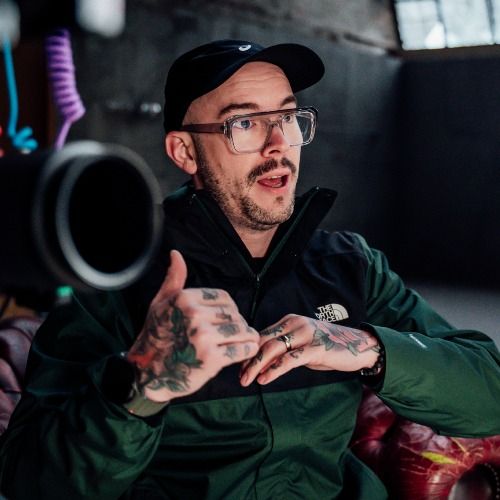
FLASHBACK Ryan Jones: On Why Branding is Not a Sponsored Art Project
Hope you enjoy this flashback episode, originally aired 14 Oct 2024.
In this flashback episode of The Build Up Podcast, host Dan Moore, Creative Director at dissident creative agency, sits down with Ryan Jones, Managing Director of SLG Agency, to explore the evolving landscape of marketing in the construction industry. With over 12 years of experience at SLG, Ryan shares how his background in PR has influenced his approach to brand strategy and client services, emphasising the importance of positioning and audience understanding.
Dan and Ryan dive into the value of research and data-driven strategies to inform creative decisions, the challenges of navigating client expectations, and the significance of brand guardianship. They also discuss the need for adapting to modern marketing practices in a traditionally conservative industry, while celebrating the potential for innovation and creativity in construction marketing. Together, they encourage listeners to embrace bold ideas and strive for excellence in their campaigns.
Follow Ryan Jones:
LinkedIn: https://www.linkedin.com/in/ryanjonesslg/
Explore SLG Agency: https://www.slg.agency/
Stay connected with dissident creative agency: https://linktr.ee/dissidentagency
Subscribe now and don't miss future episodes of The Build Up Podcast!
Transcript
I find part of my love for construction and the reason that I've chosen this will
Speaker:be my career.
Speaker:Now for for the foreseeable,
Speaker:it's consequential. If you think of the homes that we live in, the roads that we
Speaker:drive on, the hospitals that our kids are born in, and so on, this stuff matters.
Speaker:we are in the business of helping their business to grow commercially.
Speaker:And this isn't a sponsored art project.
Speaker:There has to be some sort of some sort of outcome to that.
Speaker:So
Speaker:go and figure out what's important to your audience and have some evidence to back
Speaker:that stuff up
Speaker:yeah, with brand positioning, if you get it right once, you never need to touch it
Speaker:again.
Speaker:start, shall we?
Speaker:So welcome to the builder.
Speaker:We're calling it the Build Up podcast.
Speaker:I think if we get any kind of copyright issues and stuff like that, I'm done.
Speaker:I'm the creative director at this, and we're a social first creative agency.
Speaker:I've never actually done that either before in the podcast.
Speaker:I've never introduced who we are as a, as a, as a company.
Speaker:And I'm joined by Ryan Jones,
Speaker:who is the managing director of sleep and welcome.
Speaker:First of all, thank you for having me.
Speaker:Thank you.
Speaker:You've come dressed for the for the occasion I very dissident.
Speaker:I blend in
Speaker:perfectly, very brief.
Speaker:This is colorful.
Speaker:Really. I'm really, really excited to have you.
Speaker:We had a great conversation.
Speaker:Thank God for LinkedIn.
Speaker:Because if I wasn't just randomly kind of researching, kind of like other
Speaker:people in the industry and construction industry and marketers, I never found SLG.
Speaker:And then we had a conversation over LinkedIn and had a quick call, and we were
Speaker:both like a million miles an hour.
Speaker:Talking about the industry was really, really excited because when you a lot of the
Speaker:time when you speak to marketers in brand, they're never as enthusiastic as we
Speaker:are. So I'm really, really excited to have you.
Speaker:But before we get into like today's topics and stuff, can you tell us a little bit
Speaker:about who you are?
Speaker:You're kind of backstory in the industry and kind of like what you do.
Speaker:Yeah, of course.
Speaker:So I've been at LinkedIn, funnily enough, reminded me this week that I've been SLG
Speaker:for 12 years now, and prior to that, I started my career off in PR, which of course
Speaker:was a pretty diverse mix of sectors from kind of sport, food and beverage, hotel
Speaker:and leisure, and loved it as a kind of a as a means of learning to be on that many
Speaker:different sectors, a whole new skills.
Speaker:Absolutely loved it and just found, as I was getting slightly more mature in my
Speaker:career, that I wanted one area that I could genuinely experts.
Speaker:Maybe a bit highfalutin, but but one area that I could own and kind of sort of
Speaker:build a career behind.
Speaker:And just through, through happenstance.
Speaker:A colleague of mine was working on a social housing firm and just needed some
Speaker:support.
Speaker:And could I get involved in it?
Speaker:And I had some capacity.
Speaker:And yeah, it was genuinely life changing.
Speaker:I mean, when I when I think back to that, that kind of moment as a pebble in the
Speaker:water and then the way that that's kind of rippled out from there to, to where I am
Speaker:now and where my career is heading, it's a strange how these things happen.
Speaker:But yeah, the more I speak to people in construction, actually, the more that
Speaker:someone has that kind of that sliding doors moment of someone's referred them in,
Speaker:or someone's made the recommendation, or they just happen to have taken a chance on
Speaker:something and and.
Speaker:Yeah. So so that was that.
Speaker:I then came across SLG obviously being in the northwest helped, but really good
Speaker:reputation within the construction sector.
Speaker:So the agency started in 1980.
Speaker:So heading into our 45th year of trading, and were they pretty much predominately
Speaker:construction from the get go, do you know, not far off.
Speaker:Yeah, I think one of the earliest clients was was Marshalls Paving.
Speaker:So so they kind of helped them develop the paving market in the UK.
Speaker:And then just from there, by reputation, by referral, it's just kind of grown and
Speaker:grown.
Speaker:And that is that is very much our vertical now.
Speaker:So I guess construction a lot of product manufacturers I guess is a large part of
Speaker:the sector anyway.
Speaker:But yeah, construction and industrial I would say are probably where we, where we
Speaker:focus down and and so yeah, that's for me I jumped across to to SLG within the PR
Speaker:team then moved into client services more generally as I got more senior in my
Speaker:career and headed up that part of the offer.
Speaker:And yeah, for the last two years, managing director.
Speaker:So yes during the ship now and you can like I think we're both the same
Speaker:age like is that quite young for a mountain of a large agency that do you know many
Speaker:other people in sort of increasingly so which is, which is really nice actually.
Speaker:I kind of people like yourself, the more I used to the idea of personal brand, and
Speaker:the idea really made me feel a bit icky and a bit cold.
Speaker:But the last couple of years, kind of just appreciating that time to grow up,
Speaker:you're leading this thing and therefore you have to do it.
Speaker:But really glad that I have, because you kind of meet your tribe on the way, I
Speaker:guess, as you go.
Speaker:So, yeah, we're building quite a nice network of kind of similar minded people that
Speaker:can, like, you and I can talk about this stuff for hours and really no doubt on
Speaker:this sort of stuff.
Speaker:But people have a similar age and similar life experience as well, which is a it's
Speaker:really exciting actually.
Speaker:You kind of build a picture in your head of what you think you know, an MD is like,
Speaker:or what agency ownership is like, whatever.
Speaker:And then just normal people that are as passionate about this thing as you are.
Speaker:So it's been lovely, I think.
Speaker:I think there is still a little, a little bit of a stereotype of the, you know, the
Speaker:construction in general being still a little bit old school, but it is shifting, I
Speaker:think. And and that's where you're starting to see the, the evolution of marketing
Speaker:especially and just in general and construction brands getting more
Speaker:modern is through through the people that are coming in, like the MDS are coming in
Speaker:and going, right, okay, I've worked at all these other different sectors for
Speaker:certain.
Speaker:And then I'm looking at this, this brand and I'm going, we're about 2010, 10 or 15
Speaker:years behind guys.
Speaker:There's move on.
Speaker:I think the thing you learn, a thing that people are learning, the kind of lateral
Speaker:movement of people into sector, I think is absolutely accelerating that I think
Speaker:broader macro things.
Speaker:But I think, you know, to Covid as an accelerant for things like hybrid working,
Speaker:for example, just wouldn't have happened.
Speaker:You know, we are manufacturers or, you know, we have to be on site.
Speaker:And that is correct in a lot of roles.
Speaker:But do those support roles have to be do the marketing team have to be?
Speaker:Would they be a better place doing this?
Speaker:So I think things like that have really, really improved things.
Speaker:Technology as an accelerant, I think is really pushing things on a necessity.
Speaker:I mean, it's been such a tough couple of years for, for certain parts of the supply
Speaker:chain for for myriad reasons that I think people are having to be inventive and are
Speaker:having to think about new ways.
Speaker:And, you know, one of the things that is true for all of us is that the rules
Speaker:apply. You know what?
Speaker:What makes good marketing is true in any sector.
Speaker:You kind of you have a choice whether you follow that or not.
Speaker:But there's implications for your business whether you follow that or not.
Speaker:I think there was there was an argument that we don't need to, you know, we're
Speaker:doing okay based on the relationships that we've already got from a brand's
Speaker:perspective.
Speaker:And, you know, our audience aren't on the things that you're trying to push
Speaker:in terms of marketing.
Speaker:And now they very much are.
Speaker:Yeah. And risk aversion is always going to drive things to a certain degree.
Speaker:We can I find myself doing it a lot.
Speaker:There was. I think I heard a couple of years back that I've stolen and kind of
Speaker:co-opted about casino chips.
Speaker:You only get to cash them in so many times over your career when you care about
Speaker:something more than client does.
Speaker:So we can we can tub thump.
Speaker:All we want about this piece of research says this.
Speaker:And, you know, this is best practice.
Speaker:And at certain points, what is practical if you're making that person's life more
Speaker:difficult because they now have to go and have a horrible conversation internally,
Speaker:you know, do we want to kind of pacify people and just do the easy thing, kind of
Speaker:like giving a toddler sweets?
Speaker:No, we don't.
Speaker:You kind of have to eat your greens before you get to the good stuff.
Speaker:But yeah, there has to be a trade off and there has to be a certain point where
Speaker:it's like, oh, we just have to do the job now.
Speaker:So yeah, it's always a always an interesting balance.
Speaker:But I do find that people are investing a lot more of their own time in
Speaker:understanding what that best practice looks like, whether it's through additional
Speaker:training or whether it's through kind of attending things.
Speaker:Again, technology accelerating things, but the ability now to attend, you know,
Speaker:seminars without having to leave the room.
Speaker:It's yeah, we can see that in marketing a lot that people are acquiring new skills
Speaker:and a keen to be seen to be doing more things.
Speaker:So yeah, it's been a really good time.
Speaker:You mentioned that it triggered me, you know, like taking the easy road and it's so
Speaker:tempting and construction because the for creatives and marketers the expectations
Speaker:are actually really low.
Speaker:Like for a lot of brands, they just they don't know what's achievable and what's
Speaker:available. And you know, it would be so easy to just go I'm going to do
Speaker:it. They don't have an easy, easy life here.
Speaker:I'm going to just take them just one step further and that would be enough for
Speaker:them. They'll be.
Speaker:That'll blow a lot of brands, minds and stuff like that.
Speaker:But actually like, you know, the scope for growth in the industry as a whole is
Speaker:massive. And it's something that we try and push a lot in the agency is don't take
Speaker:the easy road, like if there's an option to do something wild and interesting and
Speaker:it's going to make a huge difference.
Speaker:That's it might be tough, but let's give it a go.
Speaker:No,
Speaker:completely. I think my my natural instincts.
Speaker:It's confession time now,
Speaker:but my natural instinct is kind of to problem solve.
Speaker:It's always to kind of jump to the end.
Speaker:Like if this is the thing, then, you know, time served.
Speaker:It kind of tells me that this, broadly speaking, is going to be the thing you might
Speaker:end up being right.
Speaker:But what I find particularly well, this is unique to construction or it's just
Speaker:something that I've noticed a lot, but it's less so about the marketing team and
Speaker:more who do they need to influence behind them?
Speaker:Because a lot of the time to jump to that creative thing, it's fine.
Speaker:You'll get people that will get excited and will support it.
Speaker:That's not to say that we are the only creative people, and everyone else aren't
Speaker:interested in that sort of thing, they 100% are.
Speaker:But ultimately, when times are hard, what's the what's the case for doing?
Speaker:So, you know, this is your point on if we're going to knock this on a couple of
Speaker:steps, how do we demonstrate that we've done that beyond gut feel like I've had my
Speaker:heart broken with it several times, particularly in the PR days.
Speaker:You kind of rock up to a meeting with a load of coverage they drop on the table,
Speaker:kind of expecting to be carried around and ticker tape parade, and it's like, well,
Speaker:show me what that's done.
Speaker:Show me there, show me the bottom line impact on that.
Speaker:Show me materially how that's in.
Speaker:And they're correct.
Speaker:But it took me a long time to to learn that.
Speaker:But they're absolutely right.
Speaker:You know, we are in the business of helping their business to grow commercially.
Speaker:And this isn't a sponsored art project.
Speaker:There has to be some sort of some sort of outcome to that.
Speaker:So we've been very good, I think becoming increasingly processed, driven and making
Speaker:sure that the fundamentals are right at the start of that, we will get to the fun
Speaker:stuff against that EU Greens analogy again.
Speaker:But we're going to have to demonstrate that that that is effective.
Speaker:Sponsored art project analogy is absolutely.
Speaker:I can think of so many times early on in my career where I've just, you know, I've
Speaker:just been a creative, like marketing came quite late in my career.
Speaker:My interest in marketing, I don't really class myself as a marketer, but I'm a nerd
Speaker:for it.
Speaker:And I remember like some of some of the earlier projects, stuff that we did with
Speaker:our clients, this is perhaps even before construction for us.
Speaker:I'm like, this would be cool to do, with no knowledge of whether that would be
Speaker:successful or whatever.
Speaker:I was just like, this is a cool project, let's just give that a go and see.
Speaker:See how it lands.
Speaker:Just drop a little money.
Speaker:But we were talking about it before we started recording.
Speaker:I think that's cool, where you know the brand in the sector well enough and have
Speaker:that little bit of kind of sandbox money to go and have a little bit of a plane and
Speaker:experiment, because there will be some of that that will really, really work well
Speaker:if you can learn the lessons from that and then bake that into strategy going
Speaker:forward.
Speaker:Absolutely worthwhile, completely, completely worthwhile.
Speaker:This was way before that, though.
Speaker:This was just fun.
Speaker:Yeah. One off project.
Speaker:I'm like, okay, let's do this.
Speaker:I've got I've I've no idea whether that's that's a good idea or not, but let's just
Speaker:give it a go.
Speaker:But that's what you do in early career.
Speaker:Yeah. Lots. Of course you do.
Speaker:A
Speaker:lot to be said for gut feel as well.
Speaker:Yeah. Yeah yeah, yeah, absolutely.
Speaker:I mean, we've heard a little bit about you, but I want to hear a little bit more
Speaker:about SLG because it's I'm always impressed with agencies
Speaker:and marketers who are essentially I always call like the top down marketers, like
Speaker:we're the guys that come in quite late on in the, in the sort of planning and, and,
Speaker:and the goals.
Speaker:We're typically the guys that do all the implementation of assets and creative and
Speaker:things like that.
Speaker:And we heavily rely on clever people telling us what to do.
Speaker:So I'm always in awe of of the, the clever people and, and hearing all of
Speaker:the mad stuff that you guys do to get to the point where you're like, here's what
Speaker:we're going to do, you know?
Speaker:So can you tell us a little bit more about SLG, the kind of people that you work
Speaker:with and kind of like you're sort of your most common sort of deliverables, like
Speaker:what you do for we like being called clever people.
Speaker:So that would be the first thing so we can keep that up as a company.
Speaker:No thank you.
Speaker:We've, Yeah, we've been around for for a good old.
Speaker:And now we're coming on 45 years.
Speaker:We I think historically, we'd have sold ourselves as a full service marketing
Speaker:agency. But I hate the personal aversion to that.
Speaker:Sam, I don't know.
Speaker:So I would say we are multi-service, but that kind of top down approach, I would
Speaker:say we have three main routes into the business.
Speaker:So those would be kind of brand strategy in a, which is probably something we'll
Speaker:touch on later, but in a wholesale sense, either a repositioning piece or a rebrand
Speaker:piece or just a realignment job, which is something we do fairly often that will
Speaker:then usually will be the people that nine times out of ten will do the
Speaker:implementation off the back end of that.
Speaker:That would be then move on to kind of marketing strategy, okay.
Speaker:How is that going to be seen in the world, and how are we going to deliver on that.
Speaker:And and then into what we call our creative effectiveness piece, which we're doing
Speaker:increasingly, which obviously creative development as far as kind of concept, also
Speaker:increasingly creative testing.
Speaker:And against that point of who are the influencers internally that we need to come
Speaker:back with and making sure that we are being market oriented and customer centric
Speaker:with what we do, that this has been tested not so it becomes paint by numbers.
Speaker:And, you know, this focus group have said we must do X and Y and Z.
Speaker:But just to get a feel for are we in the are we in the right spot.
Speaker:So those would be the kind of when we engage with people, those are the three
Speaker:typical routes in.
Speaker:But then beneath that we have actually our kind of creative offer and our
Speaker:direction, copywriters etc., that do a lot of the ideation work and then the
Speaker:implementation work plus on digital offer beyond that.
Speaker:So not quite full services a lot that we are you know we don't do we would partner
Speaker:with other people on the sort of very specialist implementation stuff.
Speaker:But yeah, it's top down from that strategic point.
Speaker:The other guys that could potentially, you know like influence how, you know, how
Speaker:to go about those kind of even like the services that you guys don't offer.
Speaker:You need this go and see these guys or will bring this in as a project.
Speaker:And we'll kind of like we can bring that third parties in and do all that kind of
Speaker:completely that we, I guess we brand guardianship more often than not that what we
Speaker:don't want to do is kind of do that consultancy piece and then, you know, off you
Speaker:go and enjoy yourself.
Speaker:We have a personal interest in making sure that the brand is consistently
Speaker:replicated wherever it needs to live.
Speaker:And part of that is, is working with the right partners is making sure that, you
Speaker:know, guidelines are adhered to and that there's not something happening.
Speaker:One of the things that it used to be social media used to be the one that it's just
Speaker:a tweet or it's just or whatever.
Speaker:It's it that has to work within the context of our broader strategy.
Speaker:It's not that we can't test things and we can't have that fun, but let's understand
Speaker:why we're doing that, what we're learning from it.
Speaker:So yeah, we're not so, so controlling that this is all hours and we will we'll do
Speaker:it. Because again, the service to the client and the quality of the work is the
Speaker:paramount thing.
Speaker:And if there is someone better place for that particular thing, again, we'll have
Speaker:an interest, we'll manage the brief, we'll make sure that quality is upheld and
Speaker:that brand fundamentally is upheld.
Speaker:But but yeah, I think that's the biggest thing.
Speaker:If you've got let's if we do a scenario where you come to the number of buzzwords
Speaker:in that.
Speaker:So you've got like a company that's got an MD, maybe they've got a marketing
Speaker:manager, but they're busy and they don't know production, they don't know media and
Speaker:all that kind of thing.
Speaker:You've delivered them a strategy and a lot of documentation and stuff like that.
Speaker:And you go, well, what you need to do is get a load of assets.
Speaker:Good luck. And then and then so that companies then got to go and find a
Speaker:videographer, a photographer, graphic designer, whatever.
Speaker:That any service that you guys actually physically don't deliver and go, hey, we
Speaker:need video and all that.
Speaker:Cool. What do you need?
Speaker:Maybe this stuff, you know, it needs to be like, the kind of like a, first of all,
Speaker:great brief, it's basic, consistent messaging.
Speaker:And you can talk about the points that a creative will understand because we're
Speaker:looking for certain certain aspects.
Speaker:We like looking for things to trigger our brain to go, oh yeah, that's what you
Speaker:mean now? Yeah.
Speaker:Well, absolutely of that.
Speaker:And there's also the accountability piece of okay, how do we loop this back to
Speaker:results? How do we demonstrate value for that if we're working on that broader,
Speaker:less other brand strategy stuff, but more so on the marketing strategy where we
Speaker:know you need to achieve these things.
Speaker:We know this budget is available here.
Speaker:We'll tested it with audience and grounded ourselves in market.
Speaker:So, you know, broadly what channel plans are going to look like.
Speaker:Then it becomes on that execution element of it again, how do we maintain quality?
Speaker:How do we make sure that Brandy's lived through, and how do we make sure that
Speaker:there's some value for money on this doesn't mean cheap, but it means that if we
Speaker:are spending X, then we're going to expect Y back out of it.
Speaker:So yeah. And what's was why I love working with marketers and
Speaker:why very rarely do we work directly with founders or like minded directors of
Speaker:brands of the manufacturers, because they know how long it takes to fit stuff to
Speaker:work. They know how how to get the best out of a particular thing.
Speaker:And and just to gauge expectations, if you make a piece of content for social
Speaker:media, like what you can expect from that as against a six month campaign, it's
Speaker:such a tough don't know if you've come across the work of a guy called Thomas
Speaker:Barter previously.
Speaker:So he's in a lot of work with, I think it's the largest survey of CMOs and
Speaker:marketing directors globally, and found that of all of the C-suite positions,
Speaker:that's the most endangered.
Speaker:The shortest time in in role is chief marketing officer, because what will
Speaker:typically happen is they'll be outlasted by the chief executive hired them.
Speaker:And as soon as sales don't have that immediacy or don't do again, it's that that
Speaker:sort of expectations and agreements kind of thing.
Speaker:If those aren't aligned, if we're not clear on, it's going to take this long.
Speaker:If those expectations aren't managed, unfortunately, this is normally the one that
Speaker:would get the bullet first when when numbers don't start to do that.
Speaker:So so that management piece and again there's been a lot of I don't necessarily
Speaker:agree with all of it, but quite a binary discussion about performance marketing
Speaker:versus brand strategy or brand.
Speaker:You need both of those things.
Speaker:You know, the most famous work on on the subject is the long and the short of it
Speaker:for a reason.
Speaker:But people get so impassioned about one or the other that it's, yeah, that
Speaker:expectation is one Piece is really, really difficult to manage on that basis and in
Speaker:the industry as well.
Speaker:I won't go too deep into this, but there will be people speaking on these kinds of
Speaker:things with absolutely no research.
Speaker:They're just they're they're re hashing stuff that they've seen on our YouTube
Speaker:video or something that Seth Godin said, and they've not really thought about it
Speaker:too much. And one of the most important things when when you're sort of speaking
Speaker:about marketing is, first of all, the experience, you know, and, and also just
Speaker:having the research to sort of back it up, which will go into in a minute, because
Speaker:I think research is something that a lot of brands and marketers don't utilize.
Speaker:Yeah, something that we certainly don't utilize enough, which is why we have rely
Speaker:on clever people to do that kind of stuff so we can tell exactly what they need,
Speaker:and we can then make that idea into something tangible.
Speaker:But in terms of like the marketing sort of landscape as a whole for construction,
Speaker:broad thoughts on that compared to the perhaps other sectors and stuff like that.
Speaker:Like, what do you come across the most when you're speaking to people like myself?
Speaker:And that's really interesting.
Speaker:I think improving at a rate of knots is my honest sort of assessment of it.
Speaker:I think, again, I'm 12 years wholesaling construction, and the industry now
Speaker:isn't the one that I came into in terms of willingness to sort of look at best
Speaker:practice, to kind of understand what things are.
Speaker:And I think that's especially impressive given just how tough things have been for
Speaker:the sector, particularly the last couple of years.
Speaker:But if you follow it right way back to kind of 2008, 2009, you've got the fallout
Speaker:of all of that stuff, plus Brexit.
Speaker:And I can't think of many other sectors that get hit quite as hard as construction
Speaker:when there is some sort of economic downturn.
Speaker:And it's just been this, it's been incredibly up and down with not too many ups.
Speaker:So I think there is an understandable temptation for brands and marketers, by
Speaker:virtue of that, have to pull back and do the bare minimum.
Speaker:I think we've seen a big trend last couple of years for in housing stuff, which
Speaker:anecdotally, what that feels like that's starting to to be undone now.
Speaker:But I think even that was, was reasonably well intentioned, that if we can do this
Speaker:stuff and manage this here, then we will use our excess budget to do this stuff.
Speaker:So yeah, I think that's starting to roll back a little bit now, but I think, are we
Speaker:on a par?
Speaker:I don't know, I think see, my thing is not to go to wild on the theory stuff.
Speaker:I can bore people with it for hours, but at a certain point that has to get into
Speaker:the practical, I think, observing all the sectors.
Speaker:I'll be I'll probably not qualify because I'm not part of them.
Speaker:But just as an anecdotal observer of sort of sectors, I've seen the debate around
Speaker:brand purpose, for example, in other markets where people have gone wild with that,
Speaker:and then all of the data suggests that that isn't that beneficial.
Speaker:From a commercial point of view.
Speaker:I think we, generally speaking, are a bit more grounded and a bit more earthy,
Speaker:perhaps, than that.
Speaker:And that's probably to our whether that's a deliberate thing or not, I don't know.
Speaker:But I would say that's probably to our benefit.
Speaker:And I look at our peers actually, I look at kind of other agencies and kind of
Speaker:network with people going back to that point of meeting sort of similar MDS, and
Speaker:there is a want to follow the best practice.
Speaker:There's a want to give the best guidance possible.
Speaker:I don't meet many people that I think are, again, remember when I started off in
Speaker:PR, there was a lot of negativity around sort of snake oil salesmen and
Speaker:manipulation of media and spin dots and so on.
Speaker:I do not get that vibe from people that I meet in our sector.
Speaker:I don't meet many people that are here for a quick buck.
Speaker:Frankly, you probably find something else to do.
Speaker:If that was what you were, what you were after, you'd you'd like target
Speaker:construction know for that?
Speaker:I suspect not.
Speaker:I suspect not so
Speaker:generally, I think people understand the issues that the sector has more broadly
Speaker:away from marketing.
Speaker:Frustratingly, I guess are the same issues that it's hard for for some time.
Speaker:But again, in like finding your tribe and sort of meeting like minded people, I
Speaker:meet people that want to do something about that stuff, whether it is just just
Speaker:produce better work.
Speaker:You know, people like yourself that ultimately want to, you know, yes, it's for
Speaker:your business and yes, it's for your clients.
Speaker:But there is a there's kind of a halo effect for the industry at large that the
Speaker:better work that we all collectively can do, it's better for everyone.
Speaker:I heard, I was terrified at the time, but I heard a Rory Sutherland interview where
Speaker:he was talking and funnily enough, about construction being one of the last
Speaker:sectors, perhaps, that the big network agencies need to look at in terms of where
Speaker:they can make an impact and and generate profit.
Speaker:And at first, single bead of sweat of here they come.
Speaker:But I welcome it.
Speaker:I think the more better practitioners that we've got in this space, the more better
Speaker:work the sector produces than it can only be for the benefit of everyone.
Speaker:Yeah, absolutely. Because you get success stories about for brands, that means more
Speaker:brands, more work for marketers, more work for creatives, better for the economy in
Speaker:general.
Speaker:Completely, perhaps a little bit more manufacturer in the UK.
Speaker:The call and yeah, it's one of those things and it's it's like it was like, you
Speaker:know, back in the day when like, it's funny isn't it?
Speaker:Thinking about ten years ago when people were like, are you concerned about the
Speaker:fact that camera phones again.
Speaker:Yeah, yeah. Better.
Speaker:And I'm like, there's a lot of people being like, yes.
Speaker:And I'm like, no, no, absolutely not.
Speaker:And then but then also like making things like photography and video production
Speaker:more accessible and like, is that a concern for you that like people are coming in
Speaker:that perhaps wouldn't have had the more traditional methods of education, these
Speaker:kind of things?
Speaker:And like, there's a part of me is like, yes, I don't I'd rather not have to deal
Speaker:with it. But also at the same time I'm like, no, because everybody as soon as the
Speaker:biggest competitive everybody wins.
Speaker:And it's only the, the sort of people, anyone, anyone that's being lazy.
Speaker:They're the ones that kind of get left behind.
Speaker:Yeah. I think if you're ready to fight and if you're ready to be passionate and and
Speaker:sort of raise the bar, you're always going to come out on top.
Speaker:And it's always the hardest working people completely agree in that kind of
Speaker:commoditized market. Where do you add value?
Speaker:Like where can you add value?
Speaker:I think it's a really interesting challenge.
Speaker:Again, it's something that we've been through.
Speaker:If you can't add value, why are we.
Speaker:Why are we doing it?
Speaker:Does that not weaken our our offer more broadly, if we are seen to not be
Speaker:particularly great at this thing here.
Speaker:So it's and I think that's true across the sector.
Speaker:But I think the marketing landscape seems to be getting better at that.
Speaker:If I look at the construction, construction, marketing awards in the league table
Speaker:there, there are a lot of not quite single service agencies, but agencies that I
Speaker:would say have a particular skill in a particular area that are kind of making up
Speaker:that rather than just general marketing agencies.
Speaker:And I think, again, I think the agency landscape in the vertical is is better for
Speaker:that.
Speaker:Definitely. If. Do you ever go to any other agency awards or any kind of marketing
Speaker:or was that specific not specific to.
Speaker:Yeah. So we've been CMAs is kind of that's where we focus from a vertical.
Speaker:But that said we've had we've had work recognized by the drum campaign last couple
Speaker:of years. We were the only, we were the only construction specialist agency.
Speaker:And by virtue of that, our clients were the only construction brands.
Speaker:But we were it was brilliant, actually, I think Brett landscape in particular, to
Speaker:have those guys competing with the likes of Meta and Vodafone and Virgin and others
Speaker:to kind of see our names coming up in category was was phenomenal.
Speaker:In fact, there was a it was last year actually the drum like live broadcast.
Speaker:So we all sat in the office watching the ceremony and watching this stuff come
Speaker:through. And just it's never a name in itself, just like fame for fame sake.
Speaker:But the results on the work were incredible.
Speaker:The creative was really strong.
Speaker:So enter it, give it a chance.
Speaker:Let's see how it goes.
Speaker:And to be there was yeah, really, really fulfilling.
Speaker:I think, you know for a lot of the guys what was there a signifier I guess, you
Speaker:know they kind of signpost to other people.
Speaker:You care about this stuff and the standard of your work.
Speaker:But I think for a lot of our guys that the level of pride in being nominated and
Speaker:being seen there, we always talk about, you know, could we turn our hand to other
Speaker:sectors and could we handle a brief from here?
Speaker:I think the answer is yes, but it's choice for we don't want to we want to
Speaker:specialize here. But yeah, it is quite nice for us.
Speaker:And I guess the sector at large to see construction be seen in those places.
Speaker:I think the reason why I asked that, and I'd be interested in your honest opinion
Speaker:on this, is
Speaker:when you go when, when you're at these the Drum Awards, which is like, you know,
Speaker:multi multi industry awards.
Speaker:And then you go to like the CMAs.
Speaker:What's your view on the on the quality and the level of creativity and work in
Speaker:comparison to each other.
Speaker:There's I'm the reason why I ask that is I don't really do a lot of awards and
Speaker:something I really want to push going forward.
Speaker:I think it's always just been a budget thing for us.
Speaker:It is that I'm under the impression there's still quite a long way to go, and
Speaker:there's still a lot of room for creative to get more interesting.
Speaker:So it's a tricky one because I would again, I'm going to do the boring thing now of
Speaker:kind of slightly manipulating the question a little bit.
Speaker:But I think when you look at it from an effectiveness point of view, I think we're
Speaker:on a par.
Speaker:Then there might be certain application bits or again, that that sandbox of they
Speaker:have bigger budgets and therefore can try certain things.
Speaker:And when you actually look at particularly where you get away from the craft and
Speaker:look at where the work has seen the light of day, because that's obviously that's a
Speaker:biggie as well.
Speaker:How much of this has been done just for an award entry?
Speaker:But real world, this has had this impact.
Speaker:I think we're not far off.
Speaker:I think there's a confidence thing in the sector more broadly.
Speaker:I think of of just we are as good.
Speaker:Yeah. From a recruitment point of view.
Speaker:Let's be telling, you know, the graduating class this year that a construction
Speaker:marketing is a thing because how many of them, when they're looking at brands they
Speaker:want to work for or agencies they want to join, I think a brick manufacturer, I
Speaker:wouldn't have thought so.
Speaker:I don't have the data, but I don't have the data.
Speaker:But I wouldn't have thought so.
Speaker:But yeah, I think we're only ever going to get there.
Speaker:I think the image of the sector we'd be here for, for days.
Speaker:But I think the image of the sector is something that it's incumbent on all of us
Speaker:to, to do something about.
Speaker:And I think we don't have to we don't have to shape the narrative and we don't.
Speaker:The story is there.
Speaker:We just need to get more confident in telling it.
Speaker:So it's not be frivolous.
Speaker:And, you know, we don't need to win awards for the sake of winning awards.
Speaker:But yeah, where the work is good enough, I think it does all of us good to kind of
Speaker:be seen in those places and to stand still.
Speaker:And I think just go back to your question.
Speaker:I really, really think we can that there might be some creative bits, as I say,
Speaker:where, you know, budget was much higher and therefore they got to do X and Y and Z.
Speaker:But when you actually look at what's been achieved and the impact had, I think
Speaker:we're not a million miles
Speaker:off.
Speaker:That's really interesting.
Speaker:And again, it goes back to the fact that, you know, I came at that purely from my
Speaker:point of view of like what's what's had the most impact on me visually and
Speaker:creatively when observing like, work.
Speaker:And I haven't really got a lot of experience in this because I've not I've not had
Speaker:certainly the CMAs and stuff like that.
Speaker:Yeah, that's another year.
Speaker:Let's, let's figure some stuff out.
Speaker:But I, I don't go to any other kind of awards.
Speaker:Yeah. So you know when people have been like CMAs and then they go to like, you
Speaker:know, other awards that are like multi-discipline multi industry, I'd be interested
Speaker:to see like, you know, again, bring my own personal view.
Speaker:Like how do they compare in terms of the quality of work.
Speaker:And I never even factored budget into it of course.
Speaker:Yeah. There are some great budgets that in construction, but perhaps not compared
Speaker:to consumer brands.
Speaker:And so my thing is maybe this is the PR background, but when I look at Cannes Lions
Speaker:and the things that have won their case, these that really, really stick out to me
Speaker:over the years, they're the ones where you kick yourself going.
Speaker:How has no one thought of that?
Speaker:And then not necessarily someone had the money for this, this TV spot or this, you
Speaker:know, big experiential piece.
Speaker:Just some really.
Speaker:There was one for WaterAid where, you know, obviously, you know, Walter Reed.
Speaker:Do they provide wells in Africa?
Speaker:One of the things that they have at their disposal isn't budget, but they do have
Speaker:entries for things like marathons and so on as a charitable thing.
Speaker:So they had a woman from Africa that walks 26 miles a day to get her water, walk
Speaker:the Paris Marathon with her water jug on her head and sponsor me.
Speaker:And how was no one thought of that to that point?
Speaker:That there is that kind of lateral thinking of 26 miles for water to 26 miles
Speaker:marathon distance. And that's what I love.
Speaker:And I think that doesn't require a big budget.
Speaker:That requires knowing your brand well enough, knowing your customer and your
Speaker:audience well enough, and then being able to someone who it was to credit them.
Speaker:But I heard the phrase that creativity is being able to see around corners, and
Speaker:it's just that little, that little nugget of insight that someone else hasn't had,
Speaker:that that's what I love.
Speaker:I love to be in that meeting.
Speaker:Yeah. Penny drop.
Speaker:Yeah. So, you know, when you just like you and your team and there's a whiteboard
Speaker:session or something that.
Speaker:And I bet it's not that.
Speaker:That's a snap awake.
Speaker:3 a.m. iPhone.
Speaker:No probably. Yeah.
Speaker:Yeah. For definite.
Speaker:That's really I mean it's good to hear your views on on the landscape of
Speaker:construction, especially from social from the point of view of social media, which
Speaker:is kind of our area.
Speaker:You know, the brands that we look at, we, we, we see huge opportunities aren't
Speaker:being picked up when it comes to marketing and branding positioning.
Speaker:And that was something we discussed, like our fair positioning is kind of like our
Speaker:thing to some extent when we completely by accident what's what's happened when
Speaker:we've worked with some of the bigger brands is they've come to us and they're like,
Speaker:we don't like how we look at the moment purely from a visual point of view and also
Speaker:how we're communicating with our audience.
Speaker:And a lot of the time we're sort of we're working with brands who are potentially
Speaker:like international, South German, typically or so.
Speaker:They've got their sort of head office content and brand strategy and stuff like
Speaker:that, but it's very much tailored to a German market, which is very different to
Speaker:the UK. So when those assets typically don't work as well over here
Speaker:because it's very obviously foreign and they're not relatable as much.
Speaker:Some brands do okay, but most of the time it's just a bit off.
Speaker:So we're working with these brands to to create visuals that help position them in
Speaker:a particular viewpoint to their audience and their target market and things
Speaker:like that. But it's something that you and I both really geeked out about on the
Speaker:call previously. So can you talk us through how how important positioning is and
Speaker:how often that comes up in that you guys do?
Speaker:It's massive and frequently.
Speaker:I think the thing you said there on sort of audience is the absolute crucial thing,
Speaker:like pulling it back to to social media.
Speaker:When I first came into the construction sector proper, there was kind of a feeling
Speaker:of, you know, it was still not quite in its infancy, but it hadn't matured,
Speaker:certainly to the extent that it is now.
Speaker:There was a feeling of, you know, we need to be there.
Speaker:Well, why? Just because we do.
Speaker:Yes. And it always started with the brand themselves or competitor typically, you
Speaker:know, we've seen the competitor X or Y is there to me never felt like a good enough
Speaker:reason to invest in something or to do something.
Speaker:And it missed out that, that, that key word that you've said there on audience.
Speaker:Well, what do they want from us?
Speaker:What are they doing in this space?
Speaker:Do we have a reason and a right to be invading people within this space with our
Speaker:with our brand messaging?
Speaker:So for us, I mentioned it earlier, there's typically three ways into engaging with
Speaker:with the business, but they will all start with positioning.
Speaker:Either we will help you define that, or you will have to find that yourself and
Speaker:sort of make that part of the mix.
Speaker:But I think it's a it's one of those things.
Speaker:A little challenge for you next time you're motorway driving and you stuck the
Speaker:hand, people just watch how many vans or vehicles have.
Speaker:Livery of the experts in are the leaders in my real IC of mine.
Speaker:It's a real aversion that I've gotten.
Speaker:Again, that's the PR days of every press release.
Speaker:Starting with it.
Speaker:Was that as a subordinate clause and I really, really hate it.
Speaker:So that's a big thing because I think a lot of it it feels very insular, very
Speaker:inward looking, very selfish.
Speaker:I think it's often very highfalutin.
Speaker:You need to focus on customer.
Speaker:You need to start with, with with what the market, you know, needs and expects from
Speaker:your business, and then find a way to to service that and have that live through
Speaker:your proposition.
Speaker:Really, really cool.
Speaker:And so and you're right like positioning is is typically it's not the first thing
Speaker:that you need to be thinking about.
Speaker:Anytime you think about marketing, it always goes back to who position is or how is
Speaker:the brand positioned in the eyes of the target market?
Speaker:It's absolutely massive.
Speaker:How do you guys go about speaking to brands about positioning?
Speaker:Like because we've touched on the importance of research.
Speaker:Is that factor in?
Speaker:Yeah, massively so.
Speaker:So we had what we've been good at over the last couple of years is taking more
Speaker:stock of the way that we're we're doing things.
Speaker:So we're very sort of productized people here and you will work this way.
Speaker:But just we've just found that this is it's not sort of reinventing the wheel, but
Speaker:there's a very linear process and a very set way of working.
Speaker:But it always starts with with grounding yourself in market.
Speaker:We've got, there's a tool that we launched a little while back.
Speaker:Just the thing that kept coming up anecdotally was lack of research and lack of
Speaker:brand tracking and lack of I think, again, pressures have been so high and people
Speaker:wanting a return on marketing investment that everything's been focused on more,
Speaker:more stuff, more, more kind of, I guess, forgetting all of what marketing is meant
Speaker:to be and kind of focusing on the promotions and the thing that if we're not
Speaker:talking to market and we're not doing marketing, but then forgetting positioning
Speaker:for getting pricing, for getting all of the other stuff that we
Speaker:need to be doing behind the scenes.
Speaker:And so that's always starting point.
Speaker:And again, that's not to say you must commission us to do research projects.
Speaker:If you have that and, you know, audience and you're already tracking that stuff,
Speaker:great. Just give us the information.
Speaker:Let's try and work through it.
Speaker:But what we're finding increasingly is that that's not the case or it's patchy.
Speaker:So what we'll always do is kind of start with and it could be as simple as, as a
Speaker:piece of market orientation just to go and just go and speak to your customers.
Speaker:Go and observe people.
Speaker:If you're selling through that, that merchant channel, you know, to just go and
Speaker:observe people, how do they actually.
Speaker:Because again, there's that famous Ogilvy phrase about, you know, people don't
Speaker:think what they feel and so on.
Speaker:What do they actually do when they're in that space?
Speaker:How do they interact with your brand without you kind of influencing what they do
Speaker:and making them too conscious about what they're doing?
Speaker:It can be as base as that.
Speaker:It could be NPS, it could be brand health trackers.
Speaker:Just go and speak to your customers and understand what they think about you, what
Speaker:they think about the market.
Speaker:Ask them some prompted and questions about the category.
Speaker:Let's see who and what they recall.
Speaker:Because sometimes a lot of the time, if you've been doing this long enough and your
Speaker:brand has been in market long enough, it should just give you a little bit more
Speaker:confidence and a bit more validation of what you assume to be right.
Speaker:Anyway, that's what we were saying earlier on gut feel being a useful thing.
Speaker:It just validates some of that and gives you something that you can work with.
Speaker:But in some cases, again, that that there was little, little slivers of gold that
Speaker:you wouldn't have got all the whys had you not gone and asked.
Speaker:And I get, you know, the classic three sees, you know, customer competition and
Speaker:company like, yes, there will be elements of commercially we are doing this and
Speaker:therefore you're going to have to shape your positioning in this way.
Speaker:But orienting orienting that to to your audience and listening how that might fit.
Speaker:And historically where we've been and how we can make that part of our broader
Speaker:story. So it feels complementary rather than jarring.
Speaker:It's massive, but it has to start with customer, I think.
Speaker:I think sometimes either out of panic because, you know, we need sales and we need
Speaker:to do this thing or getting us out the size of this particular opportunity.
Speaker:We sometimes, I think, are guilty of forgetting the most important audience in
Speaker:there, and it can feel again, my budgets are tight.
Speaker:I need to be doing all of this exciting stuff with it.
Speaker:It's not the most exciting thing in the world to say, I'm going to commit to this
Speaker:research, but I think it's crucial.
Speaker:And I think that's a big thing for marketers as well, is not to feel, not to feel
Speaker:cowed or intimidated by that.
Speaker:Like, oh, we should know the brand well enough, or what's the client going to think
Speaker:if we tell them that they need to do this?
Speaker:You know, I would put our expertise in the construction sector up against any other
Speaker:marketing agency within our vertical.
Speaker:We're still not so arrogant to think that you just sit down with us and we'll
Speaker:diagnose you straight away.
Speaker:If you went to see a doctor without giving them any symptoms or any kind of
Speaker:information, they just went, this is the problem.
Speaker:You you would question that, you would go somewhere else.
Speaker:It's exactly the same thing.
Speaker:So yeah, I would I would say always, always it starts with, with better
Speaker:understanding your brand within the context of the market, within the context of
Speaker:the customer.
Speaker:And when you when you do the research on the, on the, on the audience or, you know,
Speaker:like the current customer base and you're looking to, to figure
Speaker:out positioning, is it the audience that manipulates the positioning?
Speaker:Or is it often the case that we're looking to to either reposition and therefore we
Speaker:need to change the audience's perspective?
Speaker:Do these kind of are these separate or do they come into I think they come into me,
Speaker:but it's a combination of all.
Speaker:I mean, these things are always unique, depending on the sort of position that the
Speaker:brand currently finds itself in.
Speaker:And but I think it's almost not so much you don't want to much data, but it's that
Speaker:kind of, well, we use a model that's very sort of converging and then and then
Speaker:diverging.
Speaker:We want to go as, as broad as possible to understand the context as well as
Speaker:possible, always within those three seas, but then ultimately distill this down to
Speaker:its most simple, simple point that we can do.
Speaker:I think, again, as as marketers, I think particularly agents on the agencies, on
Speaker:the consultancy side of things in an attempt to justify fee for that kind of work.
Speaker:More models, more stuff, more things, and it becomes so complex that it's a lovely
Speaker:presentation. But then how useful is that at the end of it?
Speaker:Yeah. And and I think if you're doing your job properly, it's about for people like
Speaker:yourself. You know, this is the one line thing I want people to recall about that
Speaker:brand again for all of our different models and so on.
Speaker:You know, how realistically, how many things are your audience going to retain
Speaker:about you within category?
Speaker:We've got clients that sell into, the specification side of things.
Speaker:If they're selling into an architect that's responsible for commercial projects, if
Speaker:you say a hospital, that architect you know, with, with the people that they work
Speaker:with might be responsible for hundreds of different products, decisions, how much
Speaker:time are they going to spend thinking about your category, the brands within that
Speaker:category, the different product SKUs that each of those brands.
Speaker:It's not many and most of us, again, that would be another challenge for you is
Speaker:that as you go about your week, how many purchasing decisions in your personal and
Speaker:professional life do you make on instincts or without that, that level of kind of
Speaker:cognitive load? To really consider this decision price point might be a factor.
Speaker:Perceived risk might be a factor.
Speaker:But generally speaking, we're looking for codes, we're looking for familiarity.
Speaker:And that's what you're there to do.
Speaker:And it feels counterintuitive because we're going to invest all of this time to to
Speaker:do this complex thing with a goal to make it as simple as possible at the end of
Speaker:it. But that is absolutely what you need to be doing with it.
Speaker:You want to make it as easy as possible for people to spend money on your
Speaker:particular product product.
Speaker:But yeah, I find,
Speaker:the concept of a brand doing this research, thinking that they're one thing
Speaker:and that's where they need to be.
Speaker:That's where they need to be aiming for finding out the research from their
Speaker:audience and their customer base is actually that they perceive them differently.
Speaker:And what you know, in what situation they go, well, we don't want to be here.
Speaker:We want to be over here.
Speaker:So what do we do at that point?
Speaker:Do we reposition, or do we just focus on these guys that are already buying the
Speaker:products? And do we accept the fact that that's not where we want it to be as a
Speaker:brand?
Speaker:You know, yeah.
Speaker:Well, I think the biggie with that is, I don't know, you read any of the work out
Speaker:of the Bus Institute.
Speaker:I mean, how brands grow is kind of like the most favorite famous piece of work out
Speaker:of there. A lot of the research that they've done there, the advice would be
Speaker:markets, a whole of category, okay.
Speaker:And that brand love and brand loyalty and love marks with respect to anyone that
Speaker:enjoys that stuff doesn't really exist all that often.
Speaker:There aren't many brands that that will just get complete blind loyalty from
Speaker:people. You know, if you think of, again, most categories that you will purchase,
Speaker:you'll have what they describe as a repertoire of brands within that particular
Speaker:category.
Speaker:If you know, if you're a beer drinker but you know, you walk into a pub, there
Speaker:might be a particular brand of lager that you like.
Speaker:But if you're with friends and you're having a good time, if they don't happen to
Speaker:have that one, you'll pick another.
Speaker:Rather than say, right, we are leaving, I, I'm going down here.
Speaker:It doesn't happen all that often and it'll be the same.
Speaker:You know, if you think about, you know, a contractor audience, for example, we're
Speaker:talking about similar kind of client types earlier.
Speaker:They might have a brand they prefer.
Speaker:And given the option I would always pick brand X, but they're not going to lose a
Speaker:sale because they are so indignant that they will only work with this is path of
Speaker:least resistance a lot of the time, as long as it's an appropriate alternative.
Speaker:And so. So yeah.
Speaker:So consequently, I think, you know, trying to cut the market too much to say that
Speaker:we will only sell to these people or this is our audience that becomes a dangerous
Speaker:game after a bit.
Speaker:I think there are there are things you can do within brand development to give a
Speaker:feel for, you know, price point or for quality or, you know, little little clues
Speaker:and little indicators that might make people think about where you live relative to
Speaker:other brands.
Speaker:Again, one of those three keys is understanding where you sit currently relative to
Speaker:competition, where you'd like to sit relative to competition.
Speaker:So there are things you can do once you've established that.
Speaker:But you've also got to bear in mind that the commercial element has to come in as
Speaker:well. This isn't just a an academic exercise that just the marketers are having
Speaker:fun.
Speaker:And, you know, we're going to decide this is where's the most commercial
Speaker:advantageous place for us to play.
Speaker:But again, I will say going back to that point on, you know, the things the sector
Speaker:does well and the sector does those last the last two seasons in terms of company
Speaker:and competition. I see that done well a lot.
Speaker:But sometimes that that customer centricity pieces is missing.
Speaker:So it's not it's not letting the customers kind of dictate direction in that
Speaker:respect. But it is understanding how your brand can be seen as meaningfully
Speaker:different to competition in the eyes of customer, and making sure that I think the
Speaker:bigger thing is making sure that you're tracking that in the medium term.
Speaker:Go back to the earlier part of this conversation.
Speaker:These things don't change overnight.
Speaker:So we need to understand what the commercial impacts of that change is going to be.
Speaker:And then we need to commit to tracking that over a period.
Speaker:We talk about it from a campaign point of view.
Speaker:But I think positioning, if you get your positioning right, leave it alone, because
Speaker:that's the other thing that we as marketers tend to do is that we'll overengineered
Speaker:or we'll we'll get bored of it before the markets even got used to what we're
Speaker:trying to communicate.
Speaker:You know, we talk about it with clients that, you know, a good brand campaign and
Speaker:you forget you're positioning.
Speaker:But a campaign should live in market for a decade.
Speaker:If you if you can if you've gotten that right, just leave it alone.
Speaker:Invest in it.
Speaker:But in terms of tweaking the creative or that needs to just leave it alone.
Speaker:Leave it alone and let it do its thing.
Speaker:You can do your product and service lines beneath that and kind of support that, as
Speaker:long as they're consistent and as long as they stay in within brand.
Speaker:But yeah, with brand positioning, if you get it right once, you never need to touch
Speaker:it again. It's so refreshing to hear stuff because, you know, you know, most of the
Speaker:stuff that we're working on so fast paced, we're doing it a month at a time.
Speaker:Campaigns. You know, for a lot of us, yeah, yeah, we revisiting revisiting them a
Speaker:lot of the time.
Speaker:And again, we're very much driven by marketing managers because we're essentially
Speaker:just a guide to create the stuff.
Speaker:But we'll do a campaign on a particular part, okay.
Speaker:Next month we're doing this product and stuff that would be so nice to be able to
Speaker:just go, right six months a year.
Speaker:Yeah, yeah, yeah.
Speaker:One campaign, we'll be doing multiple campaigns at the same time.
Speaker:But you know, a different brands and things like that.
Speaker:But essentially just like let's continue on this thread.
Speaker:How far can we take it.
Speaker:But you know, the stuff that you guys do is essential to that.
Speaker:And going back again, referencing back to what we were talking earlier, that the
Speaker:long and the short of it, you need both of those things, the kind of the brand
Speaker:positioning that we're talking about, that's your long term conditioning and that's
Speaker:still needs investment and that needs reinforcement, but you still need the shot.
Speaker:You still need those conversion pieces.
Speaker:You know, we're here.
Speaker:We have this particular thing.
Speaker:The famous figure from the field.
Speaker:And Burnett work was 6040 brand investment versus sales activation or performance
Speaker:marketing as they term it.
Speaker:The best brands will have both of those things going again.
Speaker:Get your positioning right and set.
Speaker:You can almost leave that alone to do its thing and then invest in it.
Speaker:Focus on, focus on that stuff.
Speaker:So love those.
Speaker:We're in danger of getting too deep in the weeds, especially for like founders and
Speaker:influences and stuff that perhaps on that learned on marketing activation and stuff
Speaker:like that. But to summarize, positioning is crucial.
Speaker:And to get positioning right you need research.
Speaker:Yeah. So research should come first and then.
Speaker:But that can of course lead to lots of other areas of, of of brand and marketing.
Speaker:But positioning crucial.
Speaker:And yeah, like I say one of our favorite things is really positioning.
Speaker:So finding out that a brand used to do this and it used to look like this and it
Speaker:used to sound like this.
Speaker:And now we're going in this direction.
Speaker:And the reason why we want to do that is because we want to appeal more to a
Speaker:particular area of customer base.
Speaker:We want to be seen as more sort of in the community, as opposed to just supplying
Speaker:it all these kinds of interesting things.
Speaker:And from a creative point of view, we go, yes, we can do this.
Speaker:Okay, thought leadership piece is interesting documentaries.
Speaker:You know, all of a sudden the artist comes out, yeah, yeah, yeah, do some really,
Speaker:really great stuff.
Speaker:But you guys have got a really cool tool that can kind of help start this off
Speaker:because I've got it's true score.
Speaker:Okay. Yes. So it's just basically it's a very quick sort of 12 question assessment.
Speaker:I think the average time to to complete about two minutes.
Speaker:So it's not it's not an academic exercise.
Speaker:You won't be there for hours.
Speaker:But just to even if you do this stuff, just as a little bit of a refresher of the
Speaker:things that you've got available to you as a starting point on brand.
Speaker:So, you know, how do we track our brand currently?
Speaker:Do we understand our customers?
Speaker:Do we have something of a pen profile drawn out?
Speaker:Do we understand our own positioning?
Speaker:Could my I think one of the questions is about internal audiences.
Speaker:Could my colleagues sum up, you know, our positioning statement in in one line, but
Speaker:then, you know, the conversation that we had earlier, you know, do we regularly get
Speaker:asked to contribute thought leadership pieces to trade media?
Speaker:Do we regularly get recognized that awards, etc.?
Speaker:So it's kind of the internal to the external, the sort of micro to the macro.
Speaker:But just to give a really quick snapshot of have we got the fundamentals in place
Speaker:and we've been using it, you know, where we've been engaged with people, that'll be
Speaker:the first thing is just like invest two minutes of your time into that.
Speaker:We will understand what's available to us.
Speaker:And then, you know, to your point earlier, do we need to commission research?
Speaker:Is it that you guys are already on the journey with that and have got it?
Speaker:It's such an amazing tool and perfect that initial sort of broad diagnosis of just
Speaker:like, okay, you feel like you've got these kind of areas set.
Speaker:That sounds good.
Speaker:There's a couple of key areas here that you feel like you're not familiar with and
Speaker:that aren't being tracked.
Speaker:Don't don't worry.
Speaker:Most people aren't doing that.
Speaker:Exactly that, you know, and there'll be situations where I bet you I could go to my
Speaker:team of with a team of five.
Speaker:And if I asked each of those individuals, you ask those individually what we do,
Speaker:they would have completely different answers.
Speaker:I have a different answer every time.
Speaker:I, you know, sort of get asked this.
Speaker:Yeah. And that's that's cool because if your team, you can have the broad strokes
Speaker:of kind of like what you do, but your actual positioning statement is crucial,
Speaker:right? It's one of those things that even even marketers and agencies and stuff
Speaker:don't get right all the time.
Speaker:No, it's completely that.
Speaker:And some of the findings from it at this point have been really, really
Speaker:interesting. Again, that lack of grounding in market and understanding audience
Speaker:when you ask questions about sort of research available, I find it really
Speaker:interesting that it was like something up north of 80% of respondents to this point
Speaker:have believe they have a clear brand positioning, and we're not testing them where
Speaker:it's like, well, submit your positioning here and we'll judge it.
Speaker:It's just self self-declared 80% have, have a defined sort of
Speaker:position that they believe.
Speaker:But then when you ask them about, you know, audience profiling and sort of specific
Speaker:groups that they speak to.
Speaker:And I know slight irony in that, I said, you need to market whole of category, but
Speaker:understand your core is fairly fundamental.
Speaker:Or understanding what that category looks like is fairly fundamental.
Speaker:That number. Absolutely.
Speaker:It goes off a cliff, it goes off a cliff.
Speaker:So that's the reason that I say, I think that that as marketers in the sector, the
Speaker:data that we have kind of says that that market orientation piece is probably where
Speaker:we're a little bit weak at the minute.
Speaker:But again, looking for some of the answers there.
Speaker:People are starting to get the fundamentals right.
Speaker:I think the final piece wants that market orientation, you know, starts the corner,
Speaker:starts to turn on Max.
Speaker:It's not a difficult thing to get right.
Speaker:And there's a there's economies of scale to how you'd approach it.
Speaker:The final piece will be that medium term tracking and having brand as part of that,
Speaker:not just here's how our campaigns performed or here's how this piece of content
Speaker:performed, but step back.
Speaker:Look at the bigger picture.
Speaker:This is the impact that that's had.
Speaker:But yeah, the starting point to all of this is having the data in the first place
Speaker:to to understand where we are.
Speaker:And that's what we're hoping to do with this tool.
Speaker:How, how, how exciting it would be like for, for a brand to be like,
Speaker:right, okay.
Speaker:Like we've never we've had a good go.
Speaker:We've got some budget, we've got some success.
Speaker:Now we'll do all these kind of exercises.
Speaker:We'll figure out our positioning, we'll get loads of research, we've got loads of
Speaker:data. And then you go look at all this ammunition we can use to just fire out
Speaker:amazing campaign. Completely that because a lot of the time, you know, we're all
Speaker:guilty of like in in some of the work that we do, guessing is best guess completely
Speaker:and go, well that kind of work that didn't.
Speaker:Yeah. And you know obviously testing is is important.
Speaker:But if you've got the data to go, you know, whatever we do we don't do listen.
Speaker:We want to keep the fun element.
Speaker:We want to keep the creativity.
Speaker:I think it's about guardrails that are important because again, I have the thing
Speaker:with SLG where in briefing work internally and developing our stuff, even like the
Speaker:tour, I'm the world's worst client.
Speaker:Like the kind of things that we're talking about now in terms of following best
Speaker:practice. I don't do that.
Speaker:My briefs are just really not well written.
Speaker:I will I will circumvent process.
Speaker:I'll cut corners based on gut feel or based on immediate needs.
Speaker:So I'm a massive, massive hypocrite when it comes to this stuff.
Speaker:So yeah. So this isn't about getting rid of that, that creative.
Speaker:It's about making that as effective as possible and making the argument for this
Speaker:stuff as compelling as possible.
Speaker:Internally, one of the favorite phrases that a former client of mine used to talk
Speaker:about a lot was marketing.
Speaker:Being the coloring in department and not being taken seriously within the walls of
Speaker:their business. And that was part of the challenge for us, was that, you know,
Speaker:without blinding people with zeros and ones, like, how do we?
Speaker:Because that's the other challenge is how do you make that data worthwhile and
Speaker:relatable to people internally?
Speaker:How do you make that matter to their day to day?
Speaker:And yeah, it was to the benefit of marketing to be able to show that as a grown up
Speaker:function within the business and to have that better integrated with other business
Speaker:functions and understand that everyone's on the same team here.
Speaker:I think to to your point about the fact you need to be hampering creativity by
Speaker:having these kind of set rules and guardrails.
Speaker:But I think every creative like is not every creative.
Speaker:Most creatives are terrified of a white piece of paper.
Speaker:Yeah. You know, unless maybe the designers are a bit different, like from from the
Speaker:point of view of like a production company and, and image makers and anyone working
Speaker:on campaigns and stuff, I'm like, give me restrictions because otherwise I can go
Speaker:wild completely.
Speaker:I can get like decision fatigue.
Speaker:But if you give me a strict set of guidelines and I've always worked well with
Speaker:these kinds of things are just like, okay, it's for these people.
Speaker:Great. That makes me means I don't have to make too many decisions on the kinds of
Speaker:people that I need in the frame who it's for, like, okay, we've got like age groups
Speaker:and like, you know, what are these sound like?
Speaker:What do they look like?
Speaker:Where are they?
Speaker:Where do they live?
Speaker:Where are they positioned?
Speaker:And all these kinds of things?
Speaker:I'm just like, okay, that makes my life so much easier.
Speaker:So I can focus on other creative elements rather than just, like the whole the
Speaker:whole thing. Yeah.
Speaker:And so you can have this like, you know, not only have you got a great opportunity
Speaker:to, to be creative, like in, in elements, you've got freedom in certain elements of
Speaker:a production, but other things are kind of set which makes your life a bit easier.
Speaker:But you know, it's going to work.
Speaker:Well, there's that I think the other because all of that is absolutely true.
Speaker:The other side of that is removing subjectivity as much as possible.
Speaker:You're never going to wholesale.
Speaker:There will be personal bias brought to it and personal taste and so on.
Speaker:And but if the brand, from positioning through to everything else says that this is
Speaker:appropriate, I don't need you to be in love with it.
Speaker:I don't need you to personally tell me your opinion on it.
Speaker:What we need again, that that market orientation.
Speaker:But is this right for the audience that we are trying to speak to?
Speaker:Is it appropriate for the broader brand story that we're trying to tell, and is it
Speaker:going to help us achieve what our overarching comms aims are?
Speaker:And if you can take those boxes, it just removes some of that I don't like.
Speaker:Again, it's always one of the things that we find is like, do you take things like
Speaker:scamp conceptual level AI now is helping us get much quicker to not finished
Speaker:article, but being able to sort of idea much faster and much more accurately.
Speaker:Does that then scare people?
Speaker:Because that looks like the finished thing?
Speaker:And do people struggle them to think conceptually?
Speaker:So it's something we're wrestling with.
Speaker:But but yeah, that's that's a big part of all of this is that and again I have it a
Speaker:lot with PSG's own work is that this isn't the Ryan Jones show.
Speaker:And this isn't about what my personal taste is.
Speaker:It's what is appropriate for what we're trying to do with with that business and
Speaker:that brand. So I think that's a big thing to come out of the whole process.
Speaker:What was the tool that the truth truth score, truth score and people can just find
Speaker:that out. And is it like is that something that can give that up for your website?
Speaker:Yeah. Yeah, absolutely.
Speaker:And if you that's the easiest way is our website is SLG agency.
Speaker:As soon as you jump on there, you will be accosted by a pop up.
Speaker:That will give you a link straight through to it.
Speaker:Oh, amazing. If not, I'll do the typical podcasting and say it's in the link notes
Speaker:link in the show notes, whatever show notes are.
Speaker:That's really cool.
Speaker:We've talked about.
Speaker:So we talked about positioning.
Speaker:We talked about research and the the importance of that.
Speaker:We talked before the podcast about I don't want to go too deep into this, but I
Speaker:think it's important to conversation to have about the brand issue with the
Speaker:construction industry as a whole.
Speaker:We kind of talked about and you sort of blew my mind a little bit into like,
Speaker:because I, you know, we're all guilty of like thinking.
Speaker:But when you think about construction, you think about tradesperson.
Speaker:And that's part of the problem with the brand issue.
Speaker:But what's your thoughts on that?
Speaker:Because we were talking about the fact that, you know, it's not sexy to be in the
Speaker:construction industry. And it should be.
Speaker:Yeah, it's phenomenally misunderstood, I think.
Speaker:Well, there was a famous piece not too far down into it, but The Farmer Report.
Speaker:And if you come across that, but that's ten years old next year, year after.
Speaker:And so that was Mark farmer kind of did a review requested by the government on the
Speaker:state of the construction sector across the piece, a number of recommendations.
Speaker:But interestingly, one of them was the sector's image and its impacts then on
Speaker:recruitment, its impacts on talent pool, not just from a numbers point of view, but
Speaker:the types of talent we're able to recruit.
Speaker:And it's just not an improving picture.
Speaker:If you look at the city data, the numbers that we're chasing of new entrants into
Speaker:market, which does not move year on year, it's been again compounded by things like
Speaker:the Brexit vote as we've lost a lot of talent, you know, people going back to to
Speaker:Europe to supply their trade over there.
Speaker:We've had a lot of retiring sort of aging workforce, aging population.
Speaker:And that's now catching up with us.
Speaker:So it's pretty scary to look at it.
Speaker:And it was something that I kept seeing in trade press and couldn't get my head
Speaker:into. And then I attended.
Speaker:It was construction week a couple of years back and listened to a debate.
Speaker:So the thing you were asking earlier on how I got into the sector, pretty much
Speaker:seemingly everyone else seems to have fallen by accident.
Speaker:Yeah, it's circumstances.
Speaker:Accident. So? So that was fascinating.
Speaker:But then so also here, the image of the sector reframed as a brand issue,
Speaker:appropriately enough, that if we can crack that, that goes a long way towards
Speaker:solving all of these other problems.
Speaker:So, so in fact, what we did was we took that back and we've created a not for
Speaker:profit called deconstruction to do exactly that.
Speaker:We're trying to work with as many people across the sector as possible to, to sort
Speaker:of share the load.
Speaker:Basically, I think, again, that there's a lot of parallels to be drawn here, but
Speaker:that customer orientation point appreciate the irony given what we're doing here.
Speaker:But I think the sex is very good at talking amongst itself and identifying these
Speaker:problems and even identifying solutions in a lot of cases.
Speaker:But we're less good at taking that final step of actually going, speaking to the
Speaker:people that we need to influence.
Speaker:So exactly that.
Speaker:So again, being consistent with our own process, the first thing that we did, and
Speaker:we're about to repeat the process is we run a 2000 person nationally representative
Speaker:survey with YouGov.
Speaker:Okay. Just to understand, you know, attitudes to the sector, would you ever
Speaker:consider working in it?
Speaker:Would you recommend it to others, some sort of word association, you know, what do
Speaker:you think of the sector and everything that you've just described?
Speaker:I think more than two thirds of adult respondents said, no, I wouldn't work in the
Speaker:sector. It was interesting.
Speaker:They won't, but they're happy to recommend it to other people.
Speaker:So a recognition that it's important, but not for not for me.
Speaker:But then when you follow the data further down into the word association stuff,
Speaker:everything that you've just said there, it's dirty, strenuous, laborious, doesn't
Speaker:pay you well, which is completely incorrect.
Speaker:And then you step back and you look at that and the scary to look at the data.
Speaker:First off, you interpret that, you kind of understand that they're not seeing
Speaker:construction as you and I know, if you think of the kinds of people that we have
Speaker:conversations with, I would consider myself to be, you know, within the
Speaker:construction sector as well as in marketing.
Speaker:And our roles just are invisible, like they just do not exist as far as.
Speaker:And that's fine.
Speaker:But how many others are there?
Speaker:If you think of every business function that exists within take a tier one
Speaker:contractor or a house builder.
Speaker:Every other business function that you would expect at any other similar sized
Speaker:organization exists. It just happens to exist within construction.
Speaker:That's before you get to things like modern methods and offsite construction and
Speaker:all these other things that are now starting to to come into the sector.
Speaker:If you look at the application of BIM, the possibilities for AI, and what that
Speaker:might mean within the sector, yes, we are.
Speaker:That's not to say that we don't need practical hands on contracting roles.
Speaker:And the hive is, you know, hard hats.
Speaker:Thing is yesterday's news not the case.
Speaker:We are in many ways, we are always going to build in the way that we have built on
Speaker:our building.
Speaker:But there is a much broader sector, and I kind of feel that until we can, until we
Speaker:can showcase the sector as a whole, people aren't going to voluntarily find their
Speaker:way into it.
Speaker:We'll still be relying on people like you and I that are referred into it, or that
Speaker:happened to fall into it by accident construction.
Speaker:And it's fine.
Speaker:It makes me some lovely anecdotes, but if that was the way to solve the skills gap,
Speaker:we'd have solved it already.
Speaker:And you know, I see this in marketing.
Speaker:I see this in most of the people that we speak with is these guys are
Speaker:reluctant construction industry workers.
Speaker:Thankfully, it's such a good industry that most people actually end up in kind of
Speaker:enjoying it and doing a good job of it, depending on the type of manufacturing you
Speaker:do.
Speaker:I've seen some pretty broken marketers for like copper pipe companies
Speaker:and stuff like that.
Speaker:I get it, you know, you maybe you wanted to work in fashion or something like that
Speaker:or in beverages and stuff, but most of the guys that we we speak to in
Speaker:marketing, they're really good at their job there, doing a fantastic job of it.
Speaker:But how cool would it have been if that was their first choice?
Speaker:Completely. That, and again, I am nerdy for this stuff anyway, so let's get my
Speaker:biases out on the table before we even get into it.
Speaker:But having worked in, as I mentioned before, sport and food and beverage and stuff
Speaker:like that, I find part of my love for construction and the reason that I've chosen
Speaker:this will be my career.
Speaker:Now for for the foreseeable, it's consequential.
Speaker:If you think of the homes that we live in, the roads that we drive on, the
Speaker:hospitals that our kids are born in, and so on, this stuff matters.
Speaker:And even if it is copper piping, the impacts of that and what that will do within
Speaker:that building versus with respect to anyone that works in any of those sectors,
Speaker:but, you know, to fragrances or alcohol or whatever else, it's it just feels to me
Speaker:it feels much more substantive and much more important.
Speaker:And I think, again, that that meeting your tribe and meeting like minded people,
Speaker:I'm increasingly finding people that see it in the same way that it's maybe not the
Speaker:most exciting icebreaker at a dinner party, but when you get into the impact of the
Speaker:work, it's yeah, it's for me, it feels much more important than a lot of other
Speaker:sectors, and it's not a shift in other industries for the for the types of people
Speaker:that are in there.
Speaker:But we, you know, and this is my broad overview of other sectors that are
Speaker:considered to be a little bit more sexy.
Speaker:So fashion style brands, sports cosmetics and stuff like that.
Speaker:Most of the time if I put the the guys that we hang around with in construction
Speaker:against those guys, I'm having better conversations.
Speaker:They're nicer people, they're more generous, and the briefs are better and the
Speaker:budgets are better.
Speaker:Couldn't possibly comment on that.
Speaker:That's my my honest opinion.
Speaker:And whenever I speak to because, you know, we hire people, creatives who want to
Speaker:get into fashion, I wanted to be in fashion.
Speaker:We did work in fashion.
Speaker:This is horrible.
Speaker:Be with these people like I want to be in, you know, I want to work with people who
Speaker:are nice, but I love that as well.
Speaker:That kind of the lateral thinking.
Speaker:And again, the best practice that comes with people making those moves into sets.
Speaker:What worked there and what did I learn there that I can apply in this in this
Speaker:market. And so yeah, I go I go right way back to it.
Speaker:I think we've got a really, really good story to tell as a sector.
Speaker:And I think doesn't mean being arrogant, but I think it means kind of, you know,
Speaker:being proud of what we've got and actually going, telling that story in a, in a way
Speaker:that connects with other people.
Speaker:Also from from the point of view of the creatives as well.
Speaker:You know, you know, me, me and my you know, my guys.
Speaker:You know, when we were in college, when we're university or whatever, we were like,
Speaker:yes, we're going to be fashion photographers, we're going to be making cool promo
Speaker:videos for Boohoo and stuff like that.
Speaker:And now we find ourselves in the construction sector, thankfully loving it.
Speaker:But also there are parallels to that.
Speaker:Like, you know, we were working the other day with a safety boot brand that do
Speaker:that.
Speaker:And because construction is getting cool, it's getting there, especially from from
Speaker:a trade point of view.
Speaker:We were doing some mad stuff on there.
Speaker:They were like, oh, this is this is what we wanted to do.
Speaker:Except we're working with like a construction brand and the brief and the pays good
Speaker:and all that kind of thing.
Speaker:To give a shout out to someone.
Speaker:Mark Southgate at Moby gave a little quote that stuck with me.
Speaker:Was that the best advert for the built environment?
Speaker:Is the built environment like once you get into kind of looking at, you know, we're
Speaker:lucky enough to work in the center of Manchester, you're the changing skyline there
Speaker:and new buildings that are going up and some of the architectural photography and
Speaker:what that will mean as an amenity to that place.
Speaker:It's you just down this rabbit hole that is just for me.
Speaker:It's endlessly fascinating.
Speaker:And if we again, if we can better use that to to tell that story, I think we're a,
Speaker:I think we're someone that's into into photography and into that kind of things.
Speaker:It's yeah, it's an easy sell, I think, to, to kind of look at the changing skyline,
Speaker:to look at architecture and to use that as a gateway into it.
Speaker:Absolutely. So we want we want to we want to change the brand image of
Speaker:construction. We can go people can go check out deconstructed and get involved.
Speaker:And, you know, let's let's have a look at construction as an industry
Speaker:that's, you know, more appealing to a broader audience.
Speaker:And, you know, I guess I imagine there's going to be it goes all the way
Speaker:throughout.
Speaker:I mean, I think, I think we've I've had this discussion multiple times that, you
Speaker:know, when I was at school, construction was seen as almost like a punishment.
Speaker:Oh, completely. Completely.
Speaker:I think I mentioned to you we had a, a client where their factory, the biggest
Speaker:employer in the area, should be celebrated as such.
Speaker:And everything else but their factory was used as a threat to people at the local
Speaker:secondary school because it was visible from the window that if you don't knuckle
Speaker:down, that's what's there for you.
Speaker:It's absolutely it's crazy that that is the that is the case.
Speaker:But hopefully, again, that's part of what what is happening and what we can
Speaker:hopefully help to do is to start to turn those narratives around and have the
Speaker:sector seen in the correct light, so that things like that don't happen anymore.
Speaker:I love that next five years predictions for the landscape of
Speaker:construction as a whole.
Speaker:I mean, I'm seeing a lot of brands, almost like sprinting
Speaker:at the moment, like they've been on a steady pace and all of a sudden I feel like
Speaker:there's an urgency around marketing.
Speaker:So I think it's a really interesting one.
Speaker:If we start with the UK, we're recording this the day before The King's Speech, but
Speaker:I've been writing a lot about it, and by the time people hear this, there'll be
Speaker:blog pieces galore.
Speaker:I would think out of SLG on this topic, but we've been keeping an eye on the
Speaker:manifestos. Obviously it looked likely there was going to be a labor government, so
Speaker:that one being a particular interest went back to 1997 when the Blair government
Speaker:came in, and the first thing they did was to focus on the Bank of England and that,
Speaker:you know, making that independent was going to be the Kickstarter for moving the
Speaker:economy.
Speaker:So I love that this time, the house building, the infrastructure, that construction
Speaker:more generally is at the heart of what the Chancellor is talking about in terms of
Speaker:getting the economy moving.
Speaker:So for a sector that has been, you know, it's been tough.
Speaker:We you know, we won't go into detail what myriad reasons for that having been the
Speaker:case, to have a new government coming in to remove some of the status that was
Speaker:there.
Speaker:Anyway, I think it's fair to say from there was comments from, from who's it now?
Speaker:Who was it?
Speaker:Mason. A couple of others that were saying that, yeah, basically the money's in the
Speaker:system, but everyone's waiting for either inflation to to drop off an election.
Speaker:We've had that now.
Speaker:So, so so what happens next?
Speaker:So I sense I sent some excitement within the system.
Speaker:I think it'll be interesting to see what the King's Speech entails, but I'm
Speaker:expecting construction and manufacturing to be at the heart of that.
Speaker:And it's slightly old fashioned, but I'm expecting an industrial strategy that
Speaker:gives the sector to that point on.
Speaker:What do we do with this blank sheet of paper to have those guardrails that
Speaker:economically, this is where we're going to and here's how we contribute.
Speaker:And so I think that's going to that's going to free up some money.
Speaker:I think what we're seeing from a marketing point of view, brands now understanding
Speaker:that we can opt to stand still, bought the market.
Speaker:Well. So so what do we want to do.
Speaker:We want to get competitive.
Speaker:And if so, how are we going to do that?
Speaker:I think you're seeing more sophisticated marketers, and I think it all makes for a
Speaker:really exciting time.
Speaker:I'm fascinating to see what happens and how it plays out.
Speaker:But I think, you know, for some of the great work that's happened in the sector in
Speaker:the last few years, when things maybe have been a bit more defensive and a bit more
Speaker:uncertain, once that that starts to even itself out, I think it's going to be a
Speaker:really, really exciting period.
Speaker:I'm really excited for the next five years.
Speaker:I think there's there's like I said, I think brands are sprinting.
Speaker:I think that's going to there's going to be more, there's going to be more
Speaker:competition. It's been more competition.
Speaker:Brands are modernizing their digitizing.
Speaker:It's still baffles me that some of these, some of the biggest brands that in
Speaker:your local builders merchants have got websites from what looks like 2001.
Speaker:Yeah, yeah, yeah.
Speaker:And it's, it's not.
Speaker:And because they've relied on relationship, they relied on handshakes in the pub
Speaker:and all that kind of thing.
Speaker:And things are changing and moving and, and the MDS and the sales directors and
Speaker:stuff are picking that up on that.
Speaker:They're hiring really good internal marketers in loads and the hiring great
Speaker:agencies because in my opinion, if you haven't got the resource to hire internally,
Speaker:then agency is the best way to go anyway.
Speaker:There's even especially even creative.
Speaker:Like I don't see a lot of in-house brands brands hiring in-house
Speaker:creatives effectively. I see a lot of juniors knocking about, you know, like
Speaker:junior photographers having a go, doing a bit of TikTok and stuff like that, but
Speaker:not like real powerful creative teams that are making a huge difference.
Speaker:There's a couple that's bring to mind.
Speaker:I'm like, these guys are it's a hell of an investment.
Speaker:Yeah. You know, you got to utilize them incredibly well.
Speaker:Whereas hiring agencies and people like slug, they've got 50
Speaker:in 2020. Yeah yeah.
Speaker:And out of interest of those 20 what's the what's the ratios of the kinds of work
Speaker:that like kinds of skills that you guys have got in there.
Speaker:So we're a creative team of I think 5 or 6 of that.
Speaker:We've got our account handling side of things where we've got again about the same
Speaker:number again, and then sort of shared services in between there.
Speaker:Or we've got specialist digital specialists.
Speaker:But yeah, in terms of waiting, probably third strategic account handling, a third
Speaker:creative and then the rest split across PR, digital shared services etc..
Speaker:Yeah, we're trying to is I think it's better than it has been where we're kind of
Speaker:much more spread out on that front.
Speaker:Now. I think historically, folks have been very much on the creative side of things
Speaker:from a billings point of view in a workload point of view.
Speaker:But yeah, we've again, as we've pivoted and as we've we've lean more into the
Speaker:strategic side of things, that's now, I naturally kind of evened itself out based
Speaker:on where based on where the work is.
Speaker:I think that's a natural progression, isn't it?
Speaker:Eventually, you know, when you're doing creative work, depending on the kinds of
Speaker:businesses you're working with, eventually you start getting answers to your
Speaker:questions and you go, okay, I need to help you guys out with this.
Speaker:You know, you're like, there'll be strategic questions that you need to be asking
Speaker:or this answers that you aren't getting from the brand that you are required.
Speaker:And we need to do some work with this.
Speaker:Well, I think we spoke about it off, Mike, but again, being consistent with our own
Speaker:rules, a big part of it for us was going speaking to clients and just having we've
Speaker:got some brilliant relationships with people where we've been able to just kind of
Speaker:sit down over a beer and just ask, you know, not that we don't want to work with
Speaker:you, but why?
Speaker:Or. Yeah, exactly that.
Speaker:You know, there are so many other, at the time, at least comparable agencies that
Speaker:you could opt to to go to.
Speaker:So what is it?
Speaker:I'm comfortable with whatever the answer is that comes back and and nine times out
Speaker:of ten it was, you know, the creative work was mentioned.
Speaker:So this isn't to denigrate any of my creative colleagues, but it was the work that
Speaker:went into developing the creative in the first place.
Speaker:So actually writing the brief and 100% that and, you know, a lot of the time we
Speaker:were kind of baking that in or we were kind of hiding that stuff back or not even
Speaker:charging for it in a lot of cases, because the the goal was to sell the creative as
Speaker:opposed to that stuff.
Speaker:So once we understood that and became more bold on that foot, and we and we've
Speaker:invested in it, we've, we've, we've done a lot of work on our own processes and so
Speaker:on.
Speaker:And our positioning now is built off of that.
Speaker:So we talk about strategic rather than strategy.
Speaker:And it's a subtle kind of a thing.
Speaker:But regardless of the output and how we implement the work, there has to be an
Speaker:element of strategic thinking that goes into it.
Speaker:So someone might come with a pure play PR brief, for instance.
Speaker:Their other needs and their positioning is all sorted.
Speaker:Everything else. And we still don't want to just jump into implementation land and
Speaker:just start having fun.
Speaker:And we still want to have that strategic input.
Speaker:And, you know, nine times out of ten we will be the kind of, you know, front line
Speaker:agency in a strategic sense for our clients and then and then work from there.
Speaker:Yeah I think yeah.
Speaker:Like it's massive isn't it.
Speaker:I think having again, speaking from our point of view, the fact that we can
Speaker:have clear rules of engagement for, for creative projects is hugely to the fact
Speaker:that we've got someone above us telling us exactly what's going on and why, why
Speaker:we're doing this.
Speaker:And and that's massive.
Speaker:And sometimes we're about to do that for our clients and kind of figure out
Speaker:especially early days, kind of figure out why why were you.
Speaker:Yeah. Yeah. But the fact that you would even ask that question, I think speaks to
Speaker:to you guys in your agency and the fact that you've got those long term retained
Speaker:relationships that, you know, the personalities, you know, the brand.
Speaker:And so, yeah, well, I'm sure, you know, is benefit from having a brief to work to,
Speaker:to your white page comment earlier.
Speaker:You guys know a lot of that stuff anyway.
Speaker:You're not just you're doing the work well questioningly.
Speaker:And just, just, you know, here's the bill for it.
Speaker:You are at least asking those questions in the first place to establish it.
Speaker:Even even if, even if we're not getting a great deal from the client, we're asking
Speaker:our marketing, our marketing team to write us a brief because we just need that.
Speaker:Because the creative, just like, I can't think I've got too much stuff on.
Speaker:Just give me give me some stuff to do.
Speaker:And I can, you know, at least some guidelines.
Speaker:Yeah, completely that massive for us.
Speaker:We're kind of the I think it's been a really, really valuable insight into
Speaker:marketing, especially, like I said, what I keep calling it, the top down marketing
Speaker:for the construction industry.
Speaker:Is there anything that I've you wanted to talk about you feel like I should have
Speaker:mentioned, or is there any last words of wisdom or things that you want to mention?
Speaker:No. Well, we've probably done it to death, but I think if there's one thing you
Speaker:kind of take away from this, for me, it's go and figure out what's important to
Speaker:your audience and have some evidence to back that stuff up again.
Speaker:It's not as exciting, perhaps, as some of the other work, but it will pay dividends
Speaker:for you down the track.
Speaker:Just to give you a starting point, to give you something to build from and
Speaker:something to discuss internally, I think.
Speaker:Yeah, don't lose sight of what's important to your customer and make sure that
Speaker:you're building from there.
Speaker:I think is the biggie for me.
Speaker:And if they wanted to come and see you guys for all of that information, more than
Speaker:happy, because even just a word research scares people.
Speaker:Yeah. How do I get it?
Speaker:You know, where do I look?
Speaker:You know, am I going to people's houses or, you know, and you guys have the
Speaker:facility to to make that stuff happen?
Speaker:Yeah. But listen, if it is going to people's houses, that is a it's a really,
Speaker:really good actually done.
Speaker:But you know, you talk about brand health tracking and things like that and it can
Speaker:it can really terrify people, particularly if you've never done that kind of thing
Speaker:before. If you're a marketer that's been focused on the implementation side of
Speaker:things, to have to to learn some of that stuff is is enormous.
Speaker:It could be embarrassing.
Speaker:Of course it can, of course, and particularly have to put your hand up internally
Speaker:to say, I think we need this, but it's not within my gift to be able to do it,
Speaker:because you will get and you will have seen this before.
Speaker:I'm sure you will get some less understanding people within that client
Speaker:organization.
Speaker:I thought this was marketing.
Speaker:Isn't that what we pay you to do?
Speaker:So yeah, it can be.
Speaker:It can be really intimidating.
Speaker:And yes, you can go to and if you have the means to, of course you should go to
Speaker:that end of things.
Speaker:But like I said before, just that, that ethnographic element of things just go.
Speaker:That's a highfalutin name for just go and speak to some people, if we will.
Speaker:We want to sell this product or service to this group of people.
Speaker:Probably a good idea to go and speak to you said group of people and understand
Speaker:what they might want from an organization like us.
Speaker:And just in doing that speaks sales team.
Speaker:Speak to the guys that are on the road that are having that client interface, get
Speaker:some honest feedback from them.
Speaker:Just find whatever ways you can to be more customer oriented.
Speaker:And that, I think, will start to identify what other gaps you have or don't have,
Speaker:as the case may be, but you are always going to have a stronger brand if you
Speaker:understand how you are seen by that customer and like you say, like implementing it
Speaker:across like things like a sales team makes it way less daunting completely.
Speaker:Because you can you can put some stuff in place where at the end of it all their
Speaker:conversations, and we're not saying give them a like a form to fill out or
Speaker:whatever, but just have some loaded, loaded questions, you know, just that they can
Speaker:put in and we can get that data, even if it's kind of like very broad gives us
Speaker:more than you had before.
Speaker:Completely that. And I would say in swimming up, one final thing to do that is make
Speaker:sure that close the loop for for another marketing phrase, but double back to said
Speaker:sales team. When you've developed that plan, you know I've synthesized all of your
Speaker:notes. Does this broadly look comfortable?
Speaker:Let them know what's happening.
Speaker:Don't let them dictate strategy on marketing necessarily.
Speaker:Always better to have those guys involved.
Speaker:Have them comfortable with what's coming down the track.
Speaker:Keep them informed on implementation and tactics that they're ahead of that sort of
Speaker:stuff, and it'll be a lot easier as a result.
Speaker:You've got to keep them on side of the sales team because they're literally the
Speaker:bread and butter of the organization.
Speaker:And we have that.
Speaker:We make films purely for the sales guys just to get them on board with a new
Speaker:project, new product.
Speaker:Sorry. Yeah, yeah.
Speaker:You know, it's just we're just we're only doing this in a turn.
Speaker:We're launching this and thinking it's going to be some amazing, like awards or
Speaker:something like, no, we're just launching it to our sales team so that they can
Speaker:understand why we're doing this and, and what this new product is and who is for.
Speaker:But that's insane.
Speaker:Perfect that someone's thinking at that level and making sure those guys are
Speaker:involved to that degree I think is phenomenal.
Speaker:So yeah, keep doing what you're doing.
Speaker:The people that have commissioned that, I'm really excited for this episode to come
Speaker:out. I'm really excited for the comments and the value that not only brands are
Speaker:going to get, but also other marketers.
Speaker:I think people should go and check you guys out on on your website.
Speaker:They should go and speak to you on LinkedIn.
Speaker:Yep. And there'll be some great conversations that I want to finish it there.
Speaker:Ryan, thank you so much for coming.
Speaker:You've been an amazing thank you.
Speaker:Thank you for having me.